Trafalgar Square Was Never the Real Battleground—Britain’s Crisis Is About Who Gets to Define the Public Square
The uproar over the Open Iftar in Trafalgar Square is not really about one evening of prayer, one mayoral appearance, or one viral video; it is about a nation arguing over ownership, belonging, symbolism, and British public life.
What made this moment explosive was not simply that Muslims prayed in a famous civic space, but that the images arrived in an overheated political climate where every public ritual is instantly reframed as inclusion, surrender, defiance, or cultural displacement.
That is why the backlash traveled so quickly online: supporters saw a pluralist capital making room for difference, while critics saw an establishment class dismissing ordinary unease and branding dissent immoral before that dissent could fully explain itself.
The controversy intensified after senior Conservative figure Nick Timothy described mass Muslim prayer in public as an “act of domination,” comments that triggered fierce condemnation from Labour figures, public debate across the right, and disagreement inside Conservative ranks.
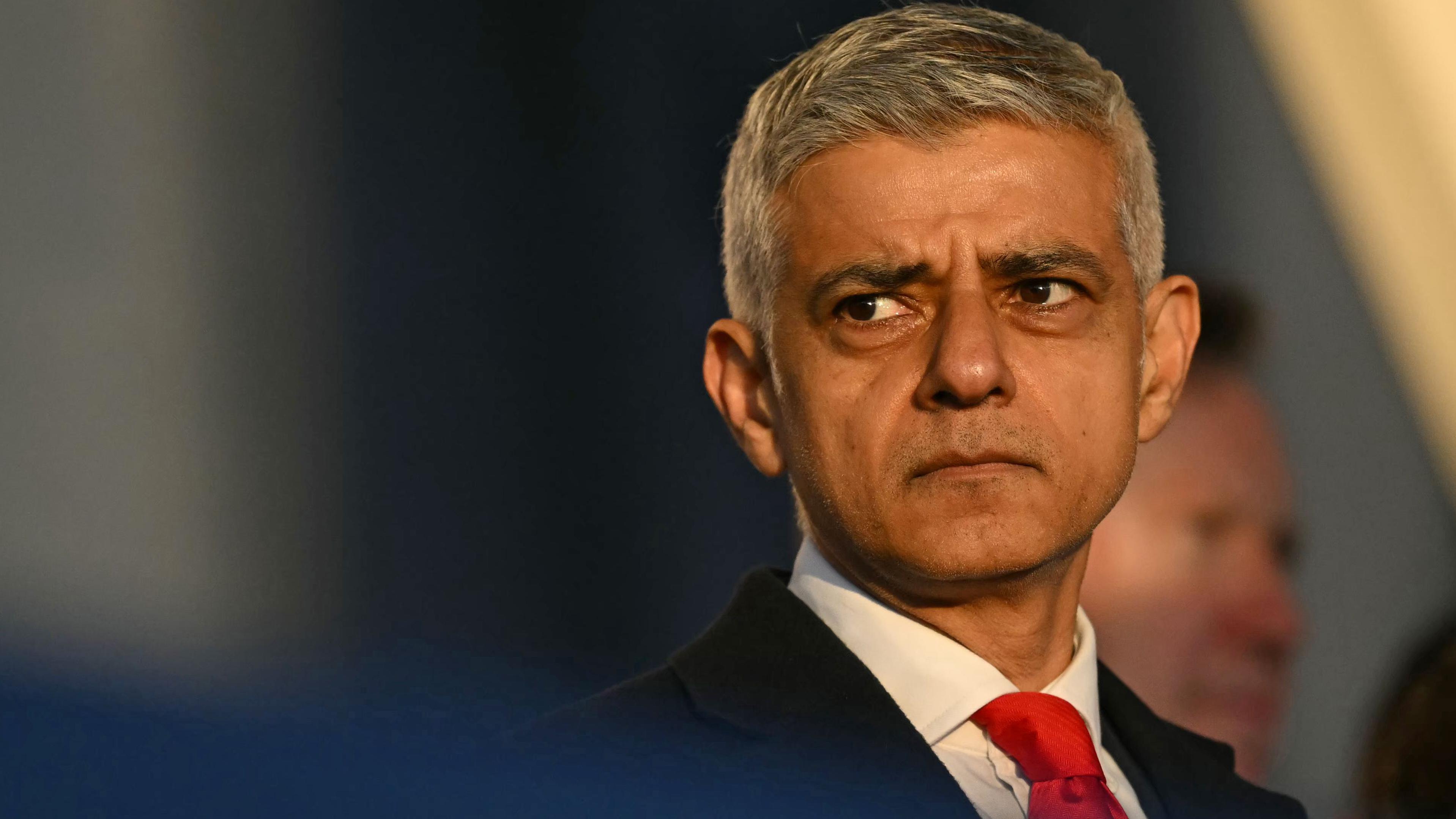
Sadiq Khan answered by framing the criticism as a betrayal of British tolerance, arguing that London has long hosted public events for different faith communities and warning that rhetoric aimed at Muslims today could easily be redirected at others tomorrow.
Meanwhile, reporting on the event itself reflected the deeper split: organizers and supporters presented Open Iftar as a community gathering built around openness and shared participation, while critics circulated footage they said suggested exclusion, segregation, and political messaging.
That clash of interpretations matters more than any single speech, because modern politics no longer depends on what happened first; it depends on which visual story becomes emotionally dominant before the public has time to examine context, sequencing, or motive.
In the age of algorithmic outrage, the side that frames the image wins the first round, and that round often becomes the contest, because millions react to symbols in seconds while evidence arrives slowly and without equal force.
This is where Khan’s defenders and detractors are both missing something important: one side treats concern about symbolism as veiled bigotry, while the other treats every official embrace of religious visibility as proof that national identity is being dissolved.
Both instincts are politically profitable, emotionally satisfying, and intellectually lazy, because they erase the harder question Britain keeps postponing: how should a democratic country balance religious freedom, civic neutrality, historical symbolism, and the discomfort of citizens who feel culturally sidelined?
That question cannot be answered by pretending Trafalgar Square is an empty patch of stone with no meaning, but it also cannot be answered by declaring that a Muslim presence there is automatically provocative or incompatible with shared space.
If Britain is serious about being pluralistic, then public space must remain genuinely public, which means neither captured by sectarian assertion nor protected by unwritten rules that mysteriously harden whenever Muslims become visible in places tied to the national story.
Read More
The real danger is not one Ramadan event, one politician’s angry statement, or one mayor’s rebuttal; the danger is a feedback loop in which elites weaponize identity, opponents weaponize resentment, and ordinary citizens are pushed into hostile interpretive camps.
Once that cycle takes hold, every gathering becomes a test of loyalty, every objection becomes evidence of prejudice, and every reassurance sounds dishonest, because the public stops hearing arguments and starts measuring which tribe is gaining ground or losing status.
Critics of Khan gain traction when they argue that leaders too quickly pathologize public concern, especially when citizens ask whether every tradition must be reinterpreted through multicultural optics while older cultural norms are expected to retreat silently and without recognition.
Khan gains traction when he reminds audiences that Britain’s democratic self-image collapses quickly if access to public expression depends on whether a religious group looks familiar, sounds familiar, or flatters the cultural comfort of people who feel historically centered.
Both arguments resonate because both touch a real anxiety: many Britons fear that elites dismiss attachment to inherited customs as embarrassment, while many minorities fear that calls for shared values become selective barriers once their presence becomes publicly undeniable.
That mutual suspicion is why this controversy feels bigger than a municipal event calendar, and why online engagement keeps accelerating; people are not just debating prayer in a square, they are debating whose discomfort counts and whose symbolism matters.
If political leaders wanted to calm this debate, they would stop speaking in accusation-first absolutes and start acknowledging two truths at once: public religious expression can be lawful and peaceful, and citizens can still question its symbolism without rejecting coexistence.
Instead, too many politicians now perform outrage for their side’s digital base, because outrage converts more efficiently than reflection, and because a clipped video, a furious monologue, or a moralized slogan spreads faster than a careful argument about civic principles.
This is why the Overton window conversation matters, though not in the simplistic way partisan influencers present it; what has shifted is not merely what can be said about Islam, but how quickly all sides escalate disagreement into existential language.
When every controversy becomes a referendum on civilization itself, moderation looks weak, explanation looks suspicious, and compromise looks like surrender, leaving the loudest voices to define reality for millions of people who are exhausted, distrustful, and permanently online.
Britain should be asking a more adult question than the one dominating social feeds: not whether one side can score a decisive symbolic victory, but whether national cohesion survives when every public square becomes a stage for zero-sum identity theater.
That is the uncomfortable lesson of the Trafalgar Square storm, and why this debate will not disappear after one news cycle; a society unsure of its own story reacts explosively whenever any group appears to rewrite the script in public.
The next viral clash may involve a different faith, a different monument, or a different politician entirely, but the pressure underneath will remain the same until Britain decides whether pluralism means negotiated confidence or permanent symbolic trench warfare.