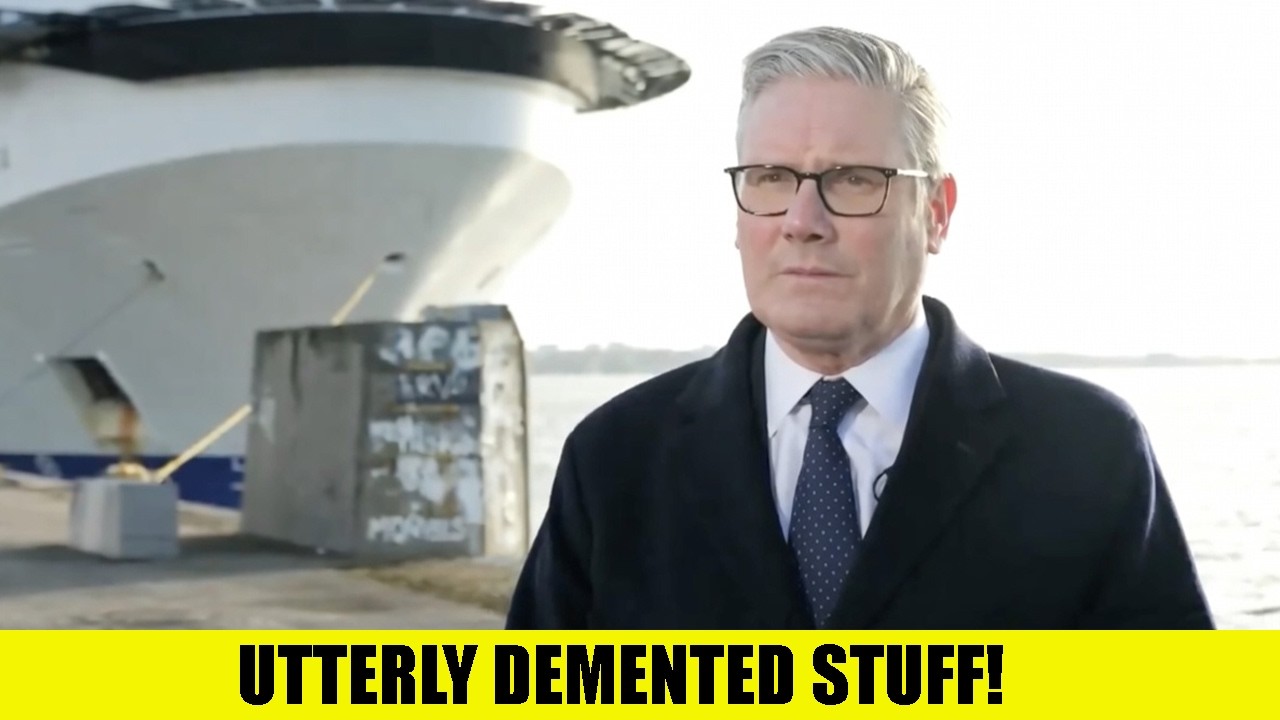
Keir Starmer has triggered a fresh wave of fury after a high-profile interview from Helsinki opened up three of the most politically volatile fault lines now hanging over his government: censorship, war priorities, and public trust.
What made this interview so combustible is that it was supposed to project seriousness abroad, yet it ended up feeding some of the deepest suspicions already growing at home about control, contradiction, and a leadership style many critics now say relies on management more than honesty.
The first flashpoint came over social media and children.
Starmer signaled he wants to go further on regulating online life, including consulting on a ban for under-16s and tightening measures around addictive platform features.
On paper, that sounds like the language of safety.
And for plenty of parents worried about screen addiction, algorithmic manipulation, and digital brain-rot, it will land as common sense.
That is exactly why the proposal is politically clever.
But the contradiction is what critics seized on instantly.
If 16-year-olds are apparently mature enough to participate in national democracy, then how can the same government argue that those just below that threshold cannot be trusted even to access the online public square in the first place.
That inconsistency is what turns a child-safety pitch into something more politically dangerous.
Because once people suspect the issue is not just protecting children but controlling information flows, the whole policy starts to look less paternal and more strategic.
This is where the deeper suspicion kicks in.
Critics are increasingly arguing that social media restrictions are being wrapped in the language of child protection while quietly serving a second purpose: narrowing the space through which younger citizens encounter alternative arguments, anti-establishment views, and criticism of the state.
Whether that fear is fair or not, politically it is potent.
Because in modern Britain almost every regulatory move touching speech, platforms, and digital access now lands inside a public already primed to suspect that “safety” is too often the packaging used for tighter control.
That is why the online safety issue refuses to stay simple.
Once children are invoked, governments gain moral cover.
But once adults notice that the regulatory architecture survives and expands even as the stated rationale shifts, they begin to ask who the system is really being built for.
The result is a familiar Starmer problem.
A policy presented as reasonable in isolation begins to look more sinister when placed alongside wider concerns about speech, enforcement, and the state’s increasing appetite to police the digital environment.
Then came the second front: war.
Speaking from Helsinki, Starmer emphasized Russian aggression and the need to work with allies, while also talking about defense spending, capability, and authorizing action against Russian shadow-fleet vessels evading sanctions.
That is serious language.
It is the language of escalation, strategic posture, and a government wanting to look resolute on the world stage.
But it also opens the door to a brutal domestic question: what threats is Britain actually prioritizing, and why.
Critics of Starmer immediately drew the contrast.
Why such forceful emphasis on Russia, they ask, when other threats affecting British interests more directly are treated with far greater caution, ambiguity, or visible reluctance.
That line of attack matters because it hits a weakness that keeps returning in Starmer’s politics.
He often sounds highly certain when speaking in alliance-approved international terms, yet far less clear when faced with questions that cut closer to public frustration about Britain’s own vulnerability and immediate interests.
This is why the interview felt politically unstable.
What should have been a clean message of seriousness abroad instead reinforced the impression of a Prime Minister who is always sharper on external posture than on domestic confidence, sharper on frameworks than on instincts, sharper on process than on public feeling.
And then, just as the interview was already politically hot, the missing-phone controversy returned.
The question put to him was simple and explosive: why should people not suspect a cover-up surrounding the stolen phone of Morgan McSweeney, given the timing and the wider atmosphere of mistrust around the government.
Starmer’s answer was procedural and firm.
He said the phone was stolen, it was reported, details were given to the police, and the suggestion that everyone should somehow have anticipated later interest in the device was far-fetched.
In a lower-trust political era, that might have closed the matter.
In the Britain Starmer now governs, it almost certainly will not.
Because the problem is no longer just what happened, but whether the public believes a government with this history deserves the benefit of the doubt.
That is the real damage.
Once suspicion becomes the default lens through which official explanations are heard, every lost item, every missing record, every delayed disclosure, and every neat procedural answer begins to sound like one more carefully managed escape hatch.

This is where all three controversies in the interview start to merge.
The social media question is about control.
The defense question is about priorities.
The phone question is about trust.
Taken together, they paint a government facing criticism not just on policy, but on motive.
That is always a far more dangerous stage for any administration.
You can survive mistakes.
You can sometimes survive inconsistency.
It is much harder to survive once a growing part of the public believes your instinctive relationship to truth is managerial, selective, and self-protective.
And that belief is clearly spreading.
The criticism now aimed at Starmer is no longer confined to one issue, one scandal, or one policy bloc.
It is becoming a broader theory of government: a leadership that talks of responsibility while centralizing control, talks of security while creating doubt, and talks of transparency while perpetually sounding defensive.