LONDON — For nearly five centuries, the British monarch has carried a title as heavy as the St. Edward’s Crown itself: Fidei Defensor, or Defender of the Faith. It is a role specifically tethered to the Church of England, a Protestant identity forged in the fires of the Reformation and solidified by constitutional oaths that leave little room for ambiguity. Yet, in the spring of 2026, a quiet storm is brewing over Buckingham Palace. As King Charles III navigates the early years of his reign, a series of traditional omissions and inclusive gestures have ignited a fierce debate over whether the modern King is defending the historical faith or inadvertently abdicating his spiritual throne through a new brand of religious “equivalence.”

The controversy reached a fever pitch this week following reports that the King would not issue a formal video message specifically for Easter, a tradition that many subjects view as a foundational duty of the head of the state and the Church. Critics were quick to point out the contrast: while the Easter message was absent, the King had recently released a warm, detailed video marking the beginning of Ramadan, expressing his heartfelt best wishes to the Muslim community. For traditionalists, this wasn’t merely an act of modern inclusivity; it was a perceived desertion of the Protestant flock at the very moment they sought the King’s reassurance.
Royal news: Bishop ‘bitterly disappointed’ with King Charles’s decision not to release Easter message and warns monarch of ‘missing public mood’
The Coronation Oath vs. Modern Sovereignty
At the heart of the outcry lies the coronation oath, a binding legal contract that requires the monarch to maintain the Protestant Reformed Religion established by law. In certain conservative circles, the argument has shifted from theological disagreement to constitutional crisis. Some observers suggest that if a monarch is found to be prioritizing other faiths to the detriment of the Church of England, they may be committing what is known as “abdication by deed”—the idea that the King’s actions signal a functional abandonment of the role he swore to uphold. This legal theory, while fringe, highlights the deep-seated anxiety regarding the Crown’s evolving spiritual identity.
The King has long been known for his interest in interfaith dialogue, once famously suggesting he would prefer to be seen as a “Defender of Faith” in a general sense, rather than “the” faith specifically. While he ultimately used the traditional wording during his coronation, his public statements continue to lean toward a universalist ethics. Last year, in a Maundy Thursday message, he linked the Christian act of Jesus washing feet to the “Jewish ethic of caring for the stranger” and similar “echoes in Islam.” To his supporters, this is the mark of a sophisticated, modern monarch; to his detractors, it is a sign that he is uncomfortable speaking about Christianity unless he can immediately pivot to other traditions.
Royal news: Bishop hits out at King Charles for including other religions in Christian holiday messages as Easter looms
A Pattern of Perception
The narrative of a “Royal Clown” or a “Spineless Traitor” has begun to circulate in the more populist corners of the British media. Critics like former MEP Godfrey Bloom have gone so far as to call for the King’s abdication, arguing that a libertarian approach to religion is acceptable for a private citizen but disqualifying for a King. The sentiment is that the monarchy’s survival depends on its role as a stable, predictable anchor for the national faith. When that anchor appears to drift toward the “Euro-Stack” of multiculturalism at the expense of its own heritage, the perceived vacuum of leadership creates a sense of betrayal among the core demographic of the monarchy.
The timing of this religious pivot is particularly sensitive. Britain is currently navigating a period of profound economic and social uncertainty, with many citizens feeling a “perilous state” of national identity. In times of crisis, the public often looks to the Crown for a sense of historical continuity. By skipping the Easter message—a staple of the British calendar for generations—the King has inadvertently signaled to some that the “Defender of the Faith” is no longer interested in the faith that founded his office. The optics of “bending the knee” to one community while “ditching” the Church of England has created a mess that the Palace’s PR machine is struggling to contain.
The Resilience of Tradition
Defenders of the King argue that his outreach to the Muslim community—acknowledging the “deeply challenging” impact of the pandemic and the empty seats at Eid dinner tables—is an essential part of being a King for all Britons. They contend that in a diverse 21st-century United Kingdom, the monarch must be a bridge-builder, not a gatekeeper. However, the counter-argument remains that the King’s primary constitutional duty is to the established Church. In the eyes of many, the King’s role is not to be “equally inclusive,” but to be specifically the head of the Protestant faith, from which his legal legitimacy is derived.
The “abdication by deed” argument suggests that the monarchy is more than just a person; it is a set of rituals and symbols. If the King stops performing the rituals of the Church of England, he risks rendering the institution of the monarchy purely formal and eventually irrelevant. Just as the League of Nations collapsed when its members stopped believing in its rules, critics warn that the Church-State alliance could crumble if the “Shopkeeper” at the top of the system stops placing the traditional signs in the window. The King’s decision to remain silent on Easter is being read as a “profound mistake” that may have long-term consequences for the Crown’s standing.
The Future of the Faith
As the debate rages, the Prince of Wales, Prince William, is also coming under scrutiny. Observers are questioning whether the next generation of the royals shares a deep Christian faith or if the monarchy is moving toward a post-religious, purely secular identity. If the Crown becomes a secular institution, it loses the “divine right” and the spiritual gravity that have historically insulated it from the whims of republicanism. The transition from a “Defender of the Faith” to a “Sovereign of Multi-Faiths” may be a bridge too far for a nation whose constitution is still rooted in the 1689 Bill of Rights.
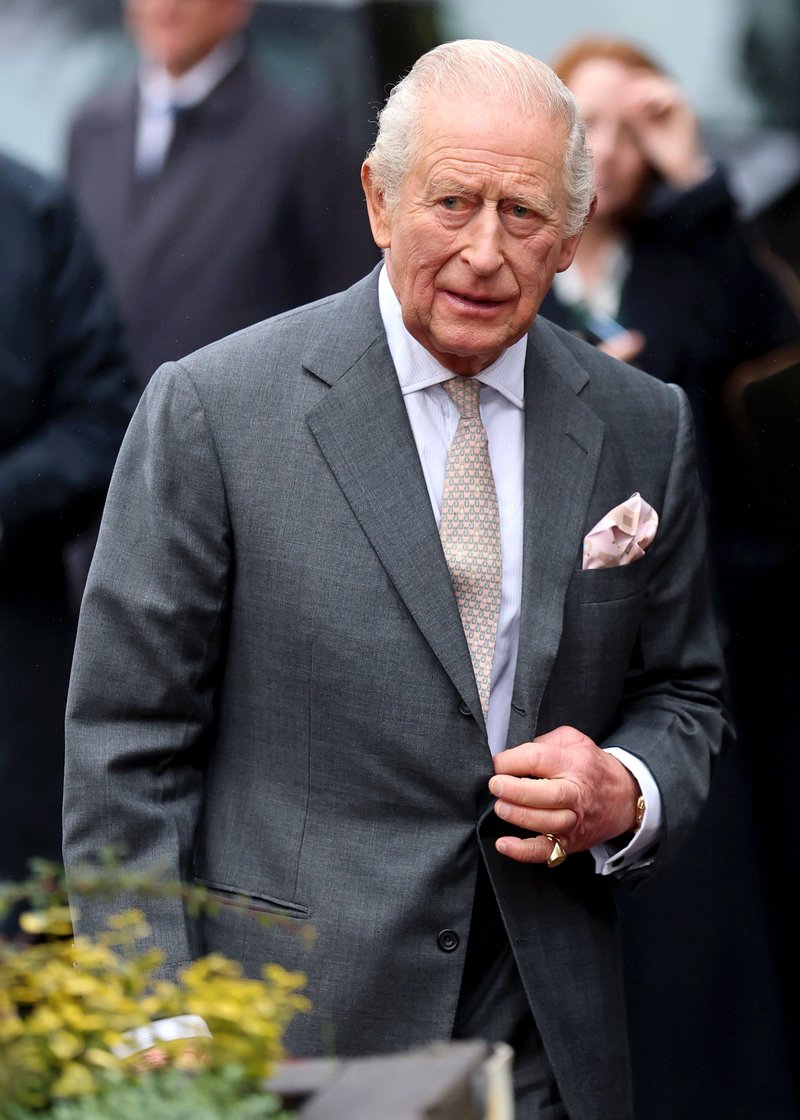
The coming months will be critical for the King to re-establish his connection with the Church of England. There is a growing call for the King to be “principled and pragmatic”—principled in his commitment to his coronation oath, and pragmatic in his outreach to other communities. But the current perception of a “calculated move” away from Christianity has left millions of British Christians feeling abandoned. In a world where global power and traditional alliances are shifting, the King’s ability to defend the historical identity of his own kingdom may be his greatest challenge yet.
How will the ‘powerfully Christian’ coronation of King Charles be viewed by modern Britain? – ABC News
A Kingdom at a Crossroads
Ultimately, the King’s religious policy is a mirror held up to the changing face of Britain. It is a nation grappling with its past while trying to define a multipolar, inclusive future. But as the King has discovered, you cannot lead a nation by only speaking in “universalist echoes.” For a country in search of reassurance, the silence of the King on Easter Sunday was louder than any speech he could have given. The Crown must decide if it is a defender of a specific, lived tradition or merely a spectator to the governance of its own creation.
The bottom line for the British public is that the King’s role is not to be “of no use” or to “failed in every conceivable way,” but to be the visible manifestation of the nation’s soul. Whether that soul remains Protestant or becomes a “full Islamic video” of inclusion is a question that will define the reign of Charles III. For now, the subjects are left wondering: if the King is no longer the Defender of the Faith, then who is?