Raise Public Order and Community Safety Concerns
London — Police forces in several parts of the United Kingdom have increased security measures following demonstrations linked to far-right groups that included anti-Muslim messaging, prompting renewed debate over public order, free expression, and community protection.
Authorities say the demonstrations, while legal in many cases, have raised concerns due to inflammatory slogans and the potential for intimidation. Several gatherings have also attracted counter-protests, heightening the risk of clashes and requiring significant police deployment to prevent disorder.
The protests come at a time when the UK is experiencing heightened political tension around immigration, cultural integration, and economic pressure. Analysts say these issues have created conditions where extremist groups can gain visibility by framing complex policy debates through identity-based narratives.
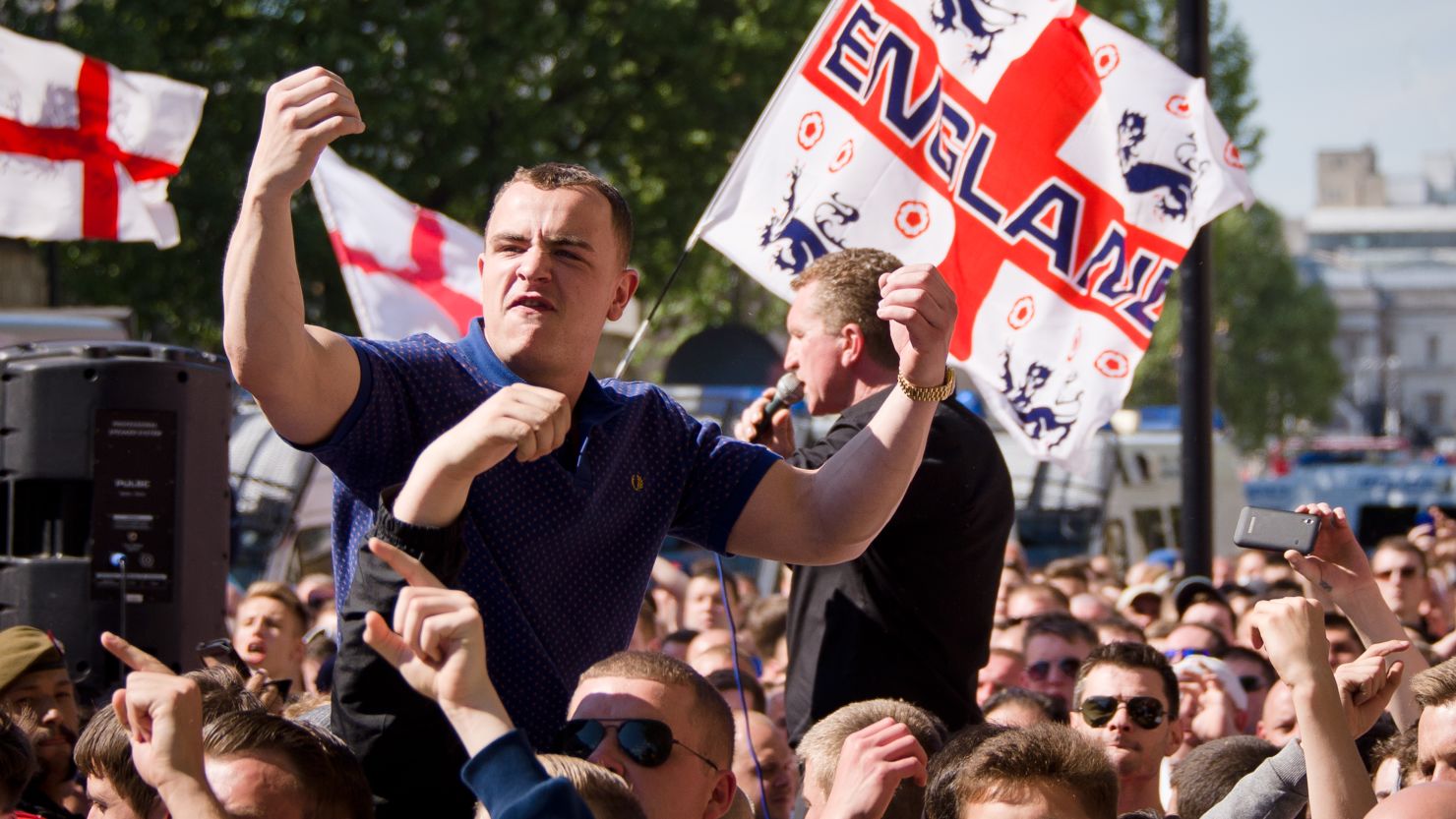
Opinion: Anti-Muslim backlash in England, but not here | CNN
Background Context
The UK has a long history of political protest, with strong legal protections for freedom of expression and assembly. At the same time, British law places limits on incitement to hatred, harassment, and public disorder, creating a legal framework intended to balance protest rights with the safety of targeted communities.
Far-right activism has periodically resurfaced in the UK, often intensifying during periods of economic strain or heightened political debate on migration and national security. In recent years, police and intelligence services have also warned about online radicalisation contributing to street-level mobilisation.
Muslim communities in Britain have repeatedly raised concerns that hostile rhetoric can increase threats, harassment, and discrimination, particularly when protests adopt broad anti-religious slogans rather than specific policy demands.
What Changed
The latest demonstrations have drawn attention due to messaging explicitly opposing Islam as a religion, rather than focusing on immigration policy or national security legislation. Community leaders and civil rights organisations argue that this crosses a line from political protest into collective targeting of a religious minority.
Police forces have responded by deploying additional officers and establishing controlled protest zones to separate demonstrators from counter-protest groups. In some locations, local authorities have also coordinated with transport services and city councils to manage crowd movement and prevent disruption.
While many participants have claimed their protests are focused on national identity and cultural policy, observers note that broad anti-Muslim slogans have raised concerns about escalating hostility toward ordinary British citizens who are Muslim.
Strategic Motivations
Political analysts suggest far-right organisers often use street demonstrations to generate media attention, recruit supporters, and pressure mainstream parties into adopting harder rhetoric on identity-related issues.
Such protests frequently emerge during election cycles or after high-profile political controversies. The strategic aim, experts say, is often less about policy proposals and more about shaping public discourse through polarising symbolism.
In this case, the framing of the protests appears designed to shift debate away from specific government decisions and toward broader cultural confrontation, which analysts warn can increase social fragmentation.
Mainstream political figures have largely distanced themselves from the protests, though the wider political climate—particularly around immigration—remains central to public debate.
Economic and Social Implications
Beyond immediate public order concerns, the demonstrations carry broader implications for community cohesion and local economic stability. Business groups in affected areas have raised concerns about disruption to city centers, reduced foot traffic, and reputational damage to local communities.
Public sector costs are also significant. Large-scale policing operations require overtime funding and coordination across multiple agencies, adding pressure to already stretched local budgets.
More broadly, community organisations warn that repeated protests targeting religious identity can create long-term social stress, increasing mistrust between communities and reducing confidence in public institutions’ ability to maintain fairness.
Policing and Legal Boundaries
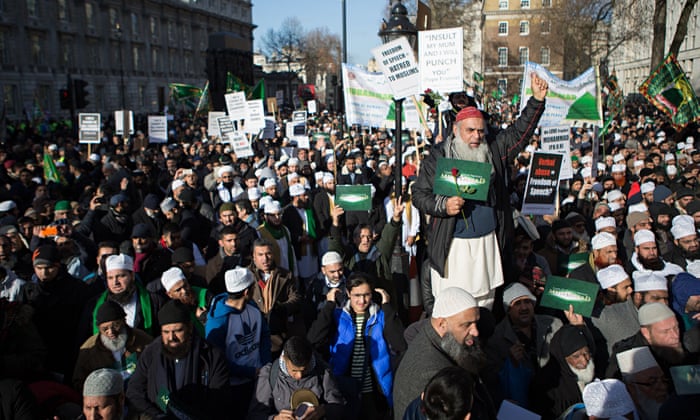
British Muslims gather in London to protest against Muhammad cartoons | Protest | The Guardian
UK police have emphasised that peaceful protest remains lawful, but that harassment, threats, and incitement fall under criminal law. Officers have also highlighted that public order powers allow authorities to impose restrictions on protest routes, assembly locations, and crowd movement where there is a credible risk of disorder.