A tense Prime Minister’s Questions erupted today as Sir Keir Starmer delivered a furious, table-thumping rebuttal to a Conservative MP’s accusation that he is a “high-tax” leader avoiding the British public. The Prime Minister’s composure visibly shattered during an exchange that laid bare the raw political nerves over the UK’s economic direction.
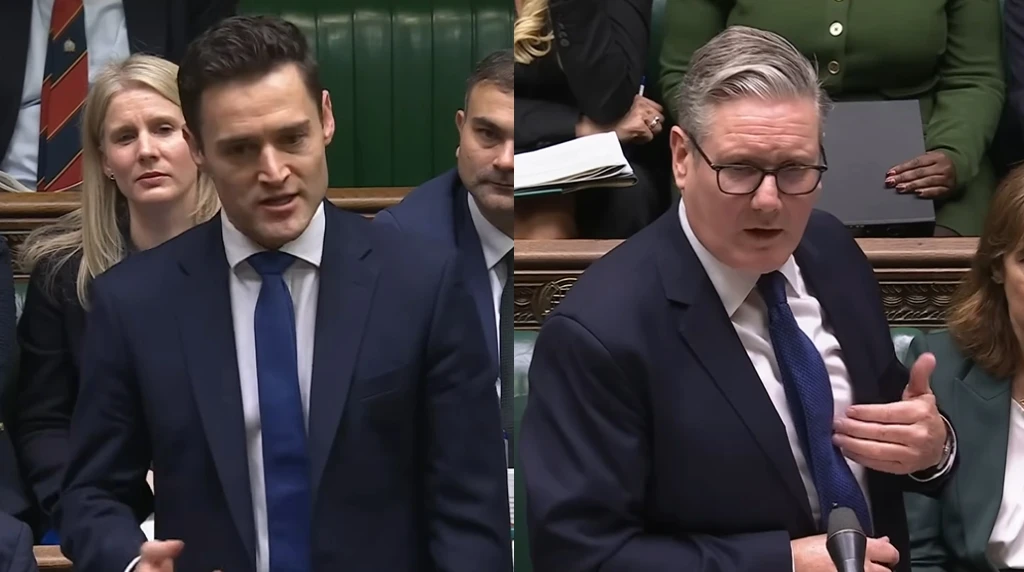
The confrontation was sparked by Dr. Luke Evans, the Conservative MP for Bosworth, who launched a pointed critique of Labour’s fiscal policies. In a series of rhetorical flourishes, Evans painted a picture of a nation buckling under new taxation. “A pub, higher taxes. A restaurant, higher taxes. A cafe, higher taxes. A farm, higher taxes,” he stated, listing venues he suggested the Prime Minister now shuns.
Evans culminated his question with a barb that appeared to strike a direct nerve. “So, Mr. Speaker, is this the reason the prime minister chooses to spend so much time out of this country?” The implication that Starmer is detached from domestic concerns due to his international schedule prompted immediate uproar from the Labour benches.

Starmer’s response was swift and heated. Dismissing the premise with a loud “What a load of nonsense,” he proceeded to slam his hand on the dispatch box. His voice rising with evident anger, the Prime Minister pivoted sharply from the domestic tax narrative to his government’s foreign policy achievements, a move interpreted by observers as a deliberate reframing of the debate.
“We are at a critical stage in progress in Ukraine that will affect Ukraine sovereignty, the whole of Europe, and the values that we hold dear,” Starmer declared, his tone forceful. He outlined a record of strengthening NATO, securing new trade deals, and improving relations with the European Union as core benefits of his diplomatic engagement abroad.
“All of which is good for our country. Ridiculous question,” Starmer concluded, his final words dripping with contempt as he gestured dismissively towards the opposition. The episode provided a rare glimpse of the Labour leader’s temper, a departure from his typically measured and forensic parliamentary style that he cultivated as Leader of the Opposition.

Political analysts suggest the outburst underscores the intense pressure on the new government to demonstrate tangible economic improvements at home. While Starmer sought to deflect onto international footing, the Conservative attack line is clearly designed to anchor him as a leader whose policies are stifling everyday businesses and communities.
The exchange also highlights a broader strategic divide between the parties, with Conservatives increasingly focusing on the day-to-day economic realities faced by small businesses and local communities. By grounding their criticism in tangible examples—rising costs, shrinking margins, and closures—they aim to shift the debate away from abstract policy and toward lived experience, where political narratives can resonate more strongly with voters.
For Keir Starmer, the challenge lies in balancing long-term economic planning with the immediate concerns of households and entrepreneurs. While the government continues to emphasize stability, investment, and fiscal responsibility, critics argue that these priorities must translate more visibly into relief on the ground if public confidence is to be maintained.
As the political battle intensifies, the coming weeks are likely to test how effectively the government can communicate its economic agenda. With scrutiny mounting both inside Parliament and among the public, moments like this may prove pivotal in shaping perceptions of leadership, competence, and the broader direction of the country’s economic future.
The clash immediately dominated political discourse, with clips of the Prime Minister’s reaction circulating widely on social media. Supporters hailed it as a justified display of passion in defense of a proactive global role, while critics labelled it a telling loss of control when faced with legitimate scrutiny of domestic pressures.
This fiery exchange sets a combative tone for the upcoming parliamentary recess, ensuring that questions of taxation, economic stewardship, and prime ministerial focus will dominate the political agenda. The government’s ability to reconcile its international ambitions with domestic economic realities now faces even sharper examination.