Britain is entering a phase where even standing in public with a camera can feel less like ordinary reporting and more like stepping into a zone where law, order, and basic civic boundaries are frighteningly unstable.
What makes moments like these so disturbing is not only the outbreak of violence itself, but the speed with which a political gathering can mutate into a scene where journalists, bystanders, protesters, and police all seem to lose confidence simultaneously.
That loss of confidence matters because a democracy depends not just on the right to protest, but on the expectation that public dissent can occur without the street instantly becoming a test of intimidation, territorial control, and physical risk.
When that expectation collapses, the damage spreads far beyond one march or one ugly confrontation, because people begin to understand that public life is no longer governed by clear rules, but by whichever faction is loudest, angriest, or most willing to push.
This is why clashes around rallies now resonate so deeply, because the argument is no longer only about ideology, or left against right, or activist against counter-activist, but about whether a normal person can safely witness, question, or document events at all.
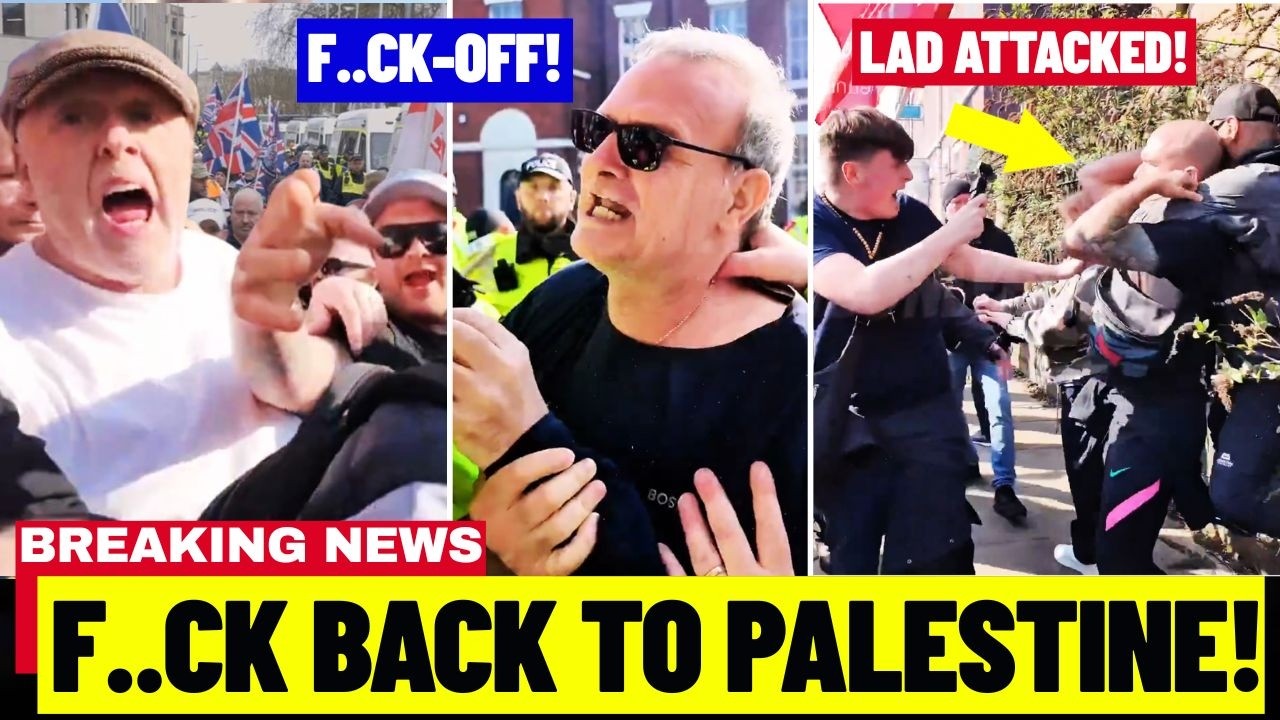
Once cameras become targets, once reporters are threatened, once people are shoved, spat at, cornered, or forced to prove which “side” they belong to, something more serious than ordinary protest politics is taking place.
What is taking place is a breakdown of civic neutrality, where the very act of observing becomes suspicious, and where public space starts to feel carved into tribal zones rather than held together by shared rules enforced with calm authority.
That is why these scenes hit such a nerve, because most people are not just reacting to one altercation, but to the growing impression that too many political events in Britain now carry the atmosphere of latent street coercion.
The public can tolerate noise, anger, slogans, and confrontation as part of a free society, but it cannot tolerate a climate in which independent observers, young people, or unaffiliated attendees become physically vulnerable simply for being present.
This is where the role of the police becomes absolutely central, because when tensions spike, officers are supposed to do more than contain disorder mechanically; they are supposed to re-establish the principle that nobody in a lawful public space is fair game.
Yet too often what the public sees instead is confusion, inconsistent decision-making, clumsy intervention, and officers making snap judgments about affiliation, intent, or risk in ways that can leave already vulnerable people feeling even less protected than before.
Nothing destroys confidence faster than the sense that the police themselves are unsure who is press, who is neutral, who is a participant, who is at risk, and who is simply being moved around because the system can no longer think clearly under pressure.
That confusion is politically devastating, because once officers start looking disorganized in public-order settings, every side begins to believe bias is in play, every intervention becomes controversial, and the legitimacy of the operation starts bleeding away in real time.
This does not mean policing such events is easy, because it obviously is not, and crowds shift quickly, rival groups posture aggressively, and officers often have seconds to make decisions in settings where one mistake can trigger a wider surge.
But difficulty does not excuse incoherence, especially when people’s safety is visibly involved, and the public is right to ask whether too many officers are being deployed into politically volatile environments without the judgment, briefing, or authority needed to protect everyone there.
The press dimension makes everything even more serious, because a society that cannot reliably protect people documenting public events is a society beginning to lose one of its most important democratic safeguards against rumor, propaganda, and selective storytelling.
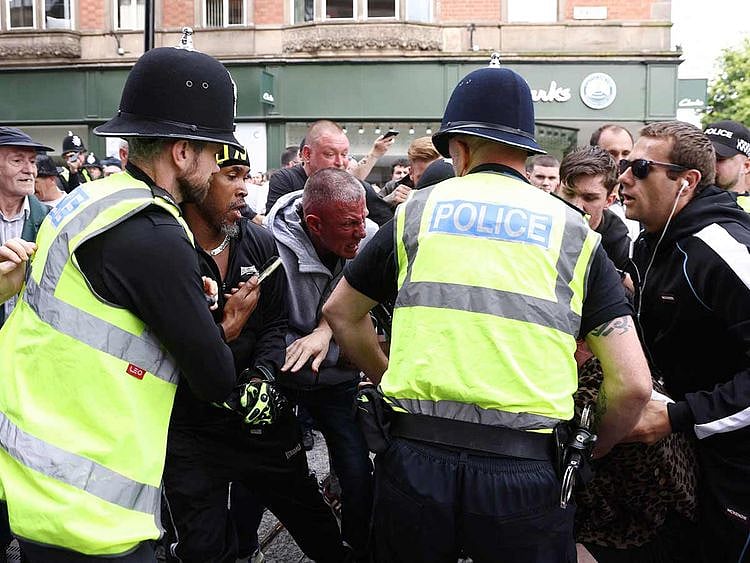
A reporter, streamer, or independent cameraman should never have to navigate a public rally as though they are crossing a battlefield while simultaneously trying to persuade both agitators and police that recording events is not itself a provocation.
Yet that increasingly appears to be the reality, and that reality is corrosive, because once documentation becomes dangerous, the story of what happened on the street is more easily shaped afterward by whichever faction controls the loudest narrative online.
This is how truth itself becomes more fragile, because violence against journalists or citizen observers does not just injure individuals, but narrows the evidentiary record of public disorder and makes democratic memory easier to manipulate after the fact.
That is why the public should take these confrontations seriously even when they appear chaotic or messy in the moment, because beneath the disorder lies a much cleaner and more alarming question: who, exactly, is now safe in Britain’s political streets.
If the answer is only those standing inside a strong group with clear protection, then public life is already becoming less democratic, because the street is no longer a place where individuals can appear, observe, and disagree safely without being swallowed by factional force.
The language around anti-fascism, extremism, nationalism, and counter-mobilization only intensifies this danger, because once every opponent is cast as existential, extraordinary conduct starts feeling justified to people who would otherwise see themselves as principled activists.
That is one reason public debate is becoming so brittle, because political identities are no longer only argued over intellectually, but performed physically, with masks, lines, chanting blocs, and increasingly theatrical confrontation replacing the older expectation of civil democratic disagreement.
