Something important is happening in Britain, and it is bigger than one rally, one speech, or one political brand, because the emotional force now moving through parts of the country feels increasingly like a movement rather than a moment.
That is why the language around demonstrations has become so charged, because organizers no longer speak only about protest, but about waves, awakenings, cultural shifts, and the feeling that people who once felt isolated now suddenly believe they belong to something much larger.
This matters because political energy changes character the moment it stops sounding defensive and starts sounding historical, when participants begin telling themselves they are no longer attending events, but standing inside the early phase of a national turning point.
That is one of the most powerful and most dangerous sensations in democratic life, because movements built on grievance become far more potent once they also become movements built on belonging, pride, recognition, and the thrill of visible numbers.
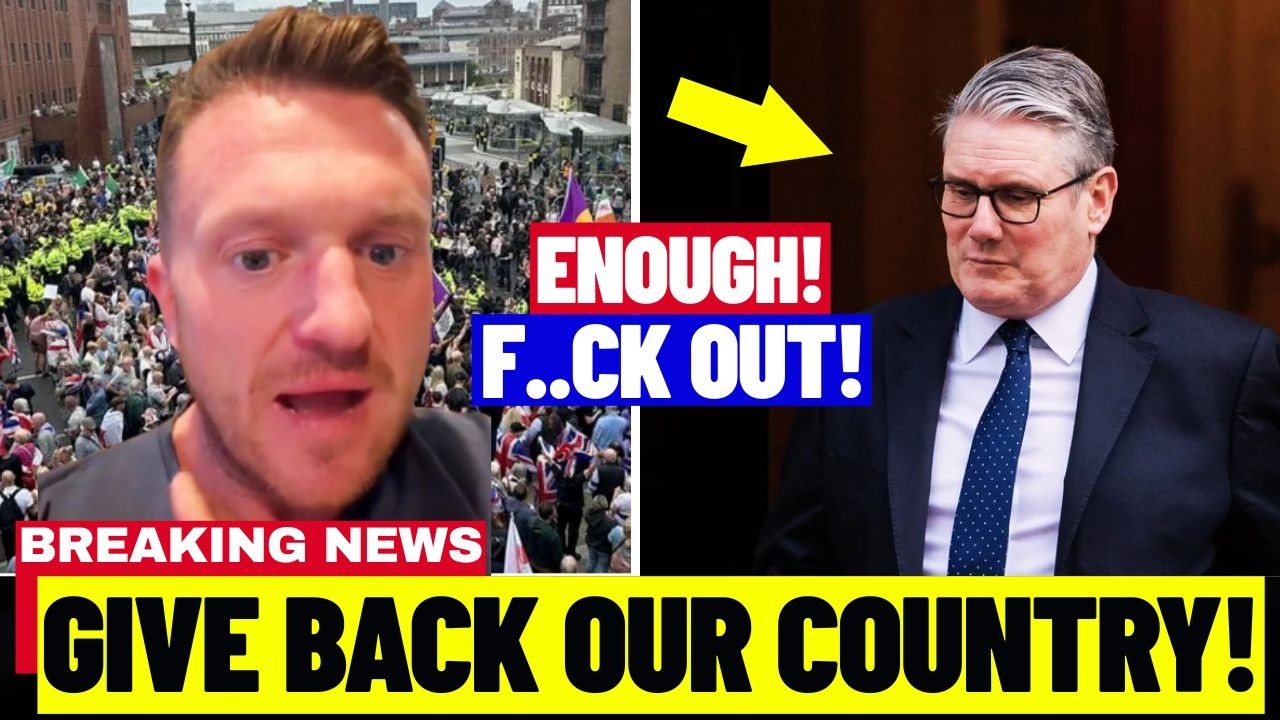
People do not travel long distances, spend money, give up weekends, and bring friends or families merely for policy detail, because what pulls them in most strongly is the emotional revelation that they are not alone in their anger.
That realization can be politically electric, especially in a country where millions already feel ignored by institutions, mocked by elites, and spoken down to by a political class that seems far more fluent in slogans than in genuine recognition of public frustration.
This is why large demonstrations matter even before they achieve anything concrete, because their first function is not always legislative pressure, but emotional proof, proof that discontent has a shape, a sound, a crowd, and a body.
For many participants, that proof is transformative, because private anger feels isolating while public anger feels legitimizing, and once people feel morally and culturally reinforced by a crowd, their relationship to politics changes very quickly.
They stop thinking like isolated complainers and start thinking like members of a cause, and that shift can produce discipline, confidence, commitment, and new organization, but it can also produce a seductive certainty that history is now moving on their side.
That is where the rhetoric of “waves,” “uprisings,” or “taking the country back” becomes so potent, because it invites supporters to interpret each protest not merely as an event, but as evidence that the national tide has finally turned.
The danger is that once politics becomes tidal in the imagination, every critic starts to look like a saboteur, every doubter like a coward, and every plea for restraint like an attempt to derail the destiny of something supposedly unstoppable.
That is a very old political pattern, and democracies should be wary of it, because movements often become most reckless precisely when they convince themselves that sheer momentum is proof of moral clarity rather than simply proof of emotional force.
Britain is particularly vulnerable to that temptation right now because public trust is low, institutions are weakly regarded, economic pain remains widespread, and social media rewards every image of scale, defiance, flags, chants, and confrontational identity.
In such a climate, protest becomes performance for both participants and spectators, because rallies are no longer just about those physically present, but about the millions watching fragments online and deciding whether what they see looks fringe or historic.
That is why numbers matter so much to organizers, because a small gathering can be dismissed while a very large one becomes harder to contain narratively, giving participants the intoxicating sense that the movement has crossed into national seriousness.
Once that line is crossed, the conversation shifts from whether something exists to whether it can be stopped, and that is usually the point at which establishment figures begin to look more worried and movement figures begin to sound more prophetic.

This is politically combustible because fear and confidence begin feeding each other, with leaders of the movement interpreting official alarm as validation, and their opponents interpreting each fresh crowd as evidence that something more threatening is taking shape.
The result is a national atmosphere thick with symbolism, with flags, slogans, marches, livestreams, counterprotests, and endless arguments over who represents the country, who belongs to its future, and who has the right to claim its moral center.
That atmosphere is not stable, because once every side begins framing itself as the authentic people and its opponents as either traitors, extremists, or enemies of the nation, ordinary democratic disagreement becomes much harder to recover.
This is especially true when street confrontations start merging with online myth-making, because then local incidents are instantly narrated as proof of national struggle, and political identity becomes something performed physically as much as argued intellectually.
That should concern everyone, because the line between passionate democratic mobilization and a culture of permanent internal confrontation is thinner than movements usually admit while they are enjoying the adrenaline of rapid growth and emotional solidarity.
A country can absolutely tolerate fierce protest, robust nationalism, and strong popular mobilization, but it cannot remain healthy if those energies are continually fed by narratives that every setback is betrayal and every compromise is surrender.
That is the road by which movements begin to view politics less as persuasion and more as destiny, less as coalition-building and more as vindication, and once they get there, discipline often gives way to grandiosity.
