
That loss of trust is no small matter, because once the law ceases to look like an instrument of public protection, it begins to look like an elite code spoken over the heads of ordinary people who are expected to endure the consequences quietly.
This is where much of the fury around deportation law now comes from, not from bloodlust or cruelty, but from the suspicion that the state has confused compassion with weakness and rights protection with a refusal to impose boundaries.
A serious country should be able to say something very basic without embarrassment: human rights matter, but they do not erase accountability, and they do not require a nation to ignore the safety of its own citizens in the name of moral vanity.
The failure of leadership has been to avoid stating that balance clearly enough, leaving the field open to louder voices who speak in absolutes and gain traction precisely because official politics sounds so hesitant, technical, and emotionally disconnected.
That is why debates once confined to legal circles now dominate kitchens, pubs, social media, and Parliament alike, because what is being argued is no longer simply a point of law, but the moral direction of the country itself.
Many people now feel that Britain has drifted into a posture of permanent self-doubt, where leaders fear appearing harsh more than they fear appearing helpless, and where firmness is treated as suspect even when public patience is visibly collapsing.
This is especially combustible when the offenders involved are not marginal administrative cases, but people convicted of violent, sexual, or predatory crimes, because then the public hears the language of rights and family life through a very different moral register.
In that register, the question becomes brutally simple: where was this concern for dignity, safety, and humanity when the victims’ lives were damaged, and why does the state sound more emotionally engaged once the offender faces consequences?
That is the point at which legal reasoning may remain valid on paper but fail catastrophically in the public square, because democratic legitimacy depends not only on consistency, but on moral intelligibility to the people whose consent sustains the system.
If a legal outcome cannot be explained in language that sounds sane, proportional, and rooted in public protection, then the law may still function technically while losing the deeper trust required for democratic endurance.
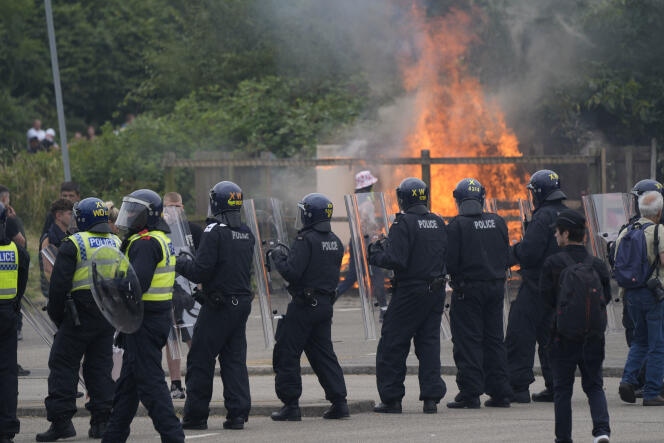
This does not mean every foreign criminal must automatically be removed regardless of circumstance, because law cannot be reduced to slogans without becoming dangerous, but it does mean the threshold for remaining should feel credible to the public.
Right now, for many citizens, it clearly does not, and that gap between law and legitimacy is becoming one of the most politically destabilizing forces in Britain, especially when it combines with wider fears around crime, weak borders, and institutional drift.
The more those anxieties accumulate, the more attractive radical solutions become, because voters who no longer trust moderate leadership start listening to anyone who sounds as though they are willing to act with speed, certainty, and visible force.