Title: When Citizens Start Acting Like the Police: Britain’s Dangerous Slide From Public Frustration to Street-Level Confrontation
A society enters a profoundly unstable phase when ordinary citizens begin to feel that keeping order, confronting danger, and protecting the vulnerable can no longer be left entirely to the institutions officially charged with doing exactly that.
That is why the growing number of street confrontations circulating online in Britain feel so politically explosive, because they suggest more than isolated arguments, revealing a dangerous public mood in which frustration is hardening into direct civilian intervention.
The videos themselves are only one part of the story, because beneath every confrontation sits a deeper national emotion, the spreading belief that the police are absent, the government is detached, and everyday people are being pushed into roles they never asked to take.
This is what makes the moment so combustible, because once citizens begin saying things like “I may as well be the police,” the crisis is no longer just about crime, migration, or public nuisance, but about the collapse of trust itself.
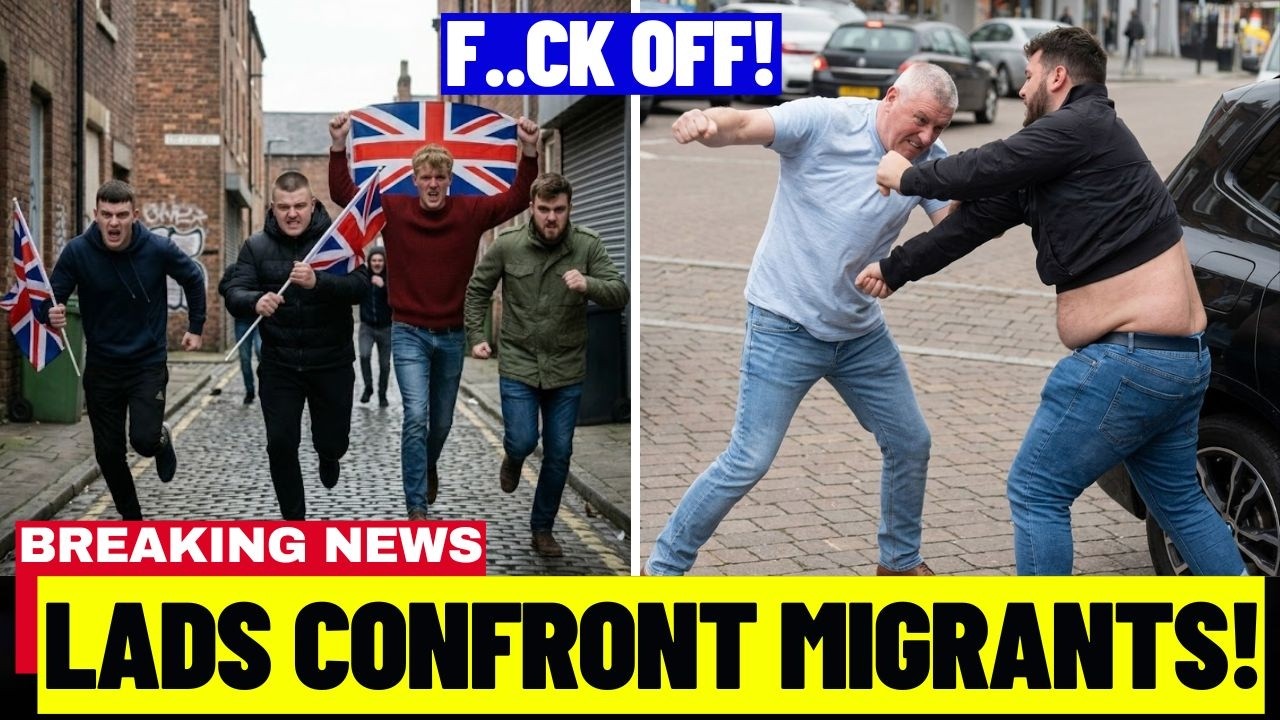
That sentence carries enormous weight in a functioning democracy.
It means the state is losing something more serious than popularity.
It means it may be losing its monopoly on confidence, which is the public belief that institutions are still present, still fair, and still capable of acting when needed.
Once that confidence begins to fail, social behavior changes quickly.
People film more.
They intervene more.
They challenge strangers more.
They begin treating sidewalks, stations, benches, hotels, and public squares not as ordinary spaces, but as contested zones where authority may not arrive in time.
That shift is dangerous because it does not stay neatly contained inside one political tribe or one viral clip.
It alters how neighbors read each other, how bystanders judge risk, and how quickly everyday tension can escalate when no one fully trusts official systems to take control.
The public frustration driving these scenes is easy to understand even without endorsing what follows from it.

People see disorder, feel exposed, and conclude that institutions are too slow, too cautious, or too politically constrained to confront what is happening in front of everyone else.
But understanding that frustration is not the same as celebrating the next step, because the next step often involves civilians taking on policing instincts without policing safeguards, authority without accountability, and confrontation without any reliable mechanism to de-escalate what comes next.
That is where democracies become vulnerable to a darker form of breakdown.
Not necessarily through total lawlessness, but through a creeping privatization of order, where citizens start improvising their own enforcement culture because they no longer believe formal enforcement will protect them consistently.
The emotional logic behind this is powerful.
If people think police are missing, they intervene.
If they think women are being harassed, they step in.
If they think public spaces are unsafe, they begin patrolling socially with cameras, suspicion, and confrontational confidence.
Read More
Yet the moral and civic cost of that shift is enormous, because once public order becomes partially crowdsourced to aggrieved citizens, the line between vigilance and vigilantism starts to thin much faster than many participants realize.
That line matters because institutions, however flawed, are at least supposed to operate under rules, evidence, restraint, and accountability, whereas civilians acting on adrenaline, identity, or anger can turn a tense moment into a dangerous one in seconds.
This is what makes the online celebration of such confrontations so reckless.
Each clip is shared as proof of courage, proof of collapse, or proof that “ordinary people are finally doing something,” yet very few of those cheering online will have to manage the consequences when confrontation spirals.
And spiral it can, because public humiliation, physical aggression, ethnic suspicion, and crowd energy form one of the most combustible mixes in modern democratic life, especially when every phone nearby can turn a local clash into national theater within minutes.
That theater then feeds back into the cycle.
More clips create more fear.
More fear creates more intervention.
More intervention creates more conflict.
And more conflict reinforces the belief that society is now running on public nerves rather than trusted rules.
This is how a nation can move from anxiety to self-help politics without ever formally deciding to do so.
No decree is issued.
No system officially changes.
But on the ground, people begin acting as if the old arrangement has already failed and informal confrontation is now part of ordinary civic life.
That perception is politically catastrophic if left unaddressed.
A government can survive criticism of policy.
It can survive electoral backlash.
But it struggles to survive the widespread impression that the public no longer trusts state authority to protect basic order without civilian improvisation.
What makes the British case especially volatile is that these scenes unfold inside a broader atmosphere already saturated with arguments over migration, public safety, speech, legitimacy, and whether institutions have become too disconnected from ordinary experience to command belief.
So each new confrontation does not remain local for long.
It becomes symbolic.
A man on a bench becomes a referendum on state weakness.
A tense argument outside a hotel becomes a proxy war over borders.
A scuffle in public becomes evidence for grand narratives about national decline.
That symbolic inflation is one of the most dangerous features of the digital era, because people stop asking first whether a situation was resolved wisely, legally, or safely, and begin asking only whether it “proves” what they already believe about society.
For some viewers, it proves that citizens must step in because the state has disappeared.
For others, it proves that communities are being whipped into mutual suspicion by online outrage and identity politics.
Both readings can intensify each other, leaving the wider public even less secure.
The real losers in that cycle are ordinary residents who want neither denial nor chaos.
They do not want to be told nothing is wrong.
But neither do they want their neighborhoods turned into stages where every grievance is acted out by strangers, activists, amateur enforcers, and cameras hunting the next viral flashpoint.
They want competent policing.
They want clear rules.
They want visible protection that does not require them to become unwilling participants in direct confrontation with people they do not know and cannot safely control.
That is why this moment is such a serious test for Britain.
If the state continues to look absent, timid, or inconsistent, more people will feel morally justified in stepping forward.
And if more people step forward, more confrontations will become inevitable, regardless of whether they begin with genuine concern or reckless provocation.
Once that process matures, social trust erodes on every side.
Minorities feel hunted.
Locals feel abandoned.
Police feel resented.
The government looks detached.
And every new incident becomes another piece of evidence in a nation-wide argument over who, if anyone, is still in control.
This is the point at which a democracy must choose what kind of future it is willing to tolerate.
One path rebuilds public confidence through visible enforcement, fair rules, and honest leadership that does not insult people’s fears.
The other path allows frustration to keep mutating into informal street power exercised by citizens who increasingly believe they are on their own.
If Britain drifts too far down the second path, the issue will no longer be whether one confrontation was justified or one video looked heroic.
The issue will be whether the country has quietly accepted a new civic norm in which ordinary people feel compelled to act like police because they no longer believe the police will act for them.
And once a nation reaches that point, the damage goes far beyond public order.
It reaches into the democratic imagination itself, replacing confidence with suspicion, replacing restraint with confrontation, and replacing shared trust with the dangerous belief that street-level force is now the language ordinary citizens must use to be heard.