The controversy surrounding the large Ramadan gathering in Trafalgar Square has not faded.
If anything, it has become one of those moments that keeps growing after the event itself, because people are no longer arguing only about what happened, but about what it meant.
That is why the debate has spread so far beyond London.
What took place in the capital has become a national argument about public space, symbolism, political messaging, and whether Britain still has a shared understanding of what civic neutrality is supposed to look like.
For supporters, the event was a celebration of faith, community, and visibility in a modern plural city.
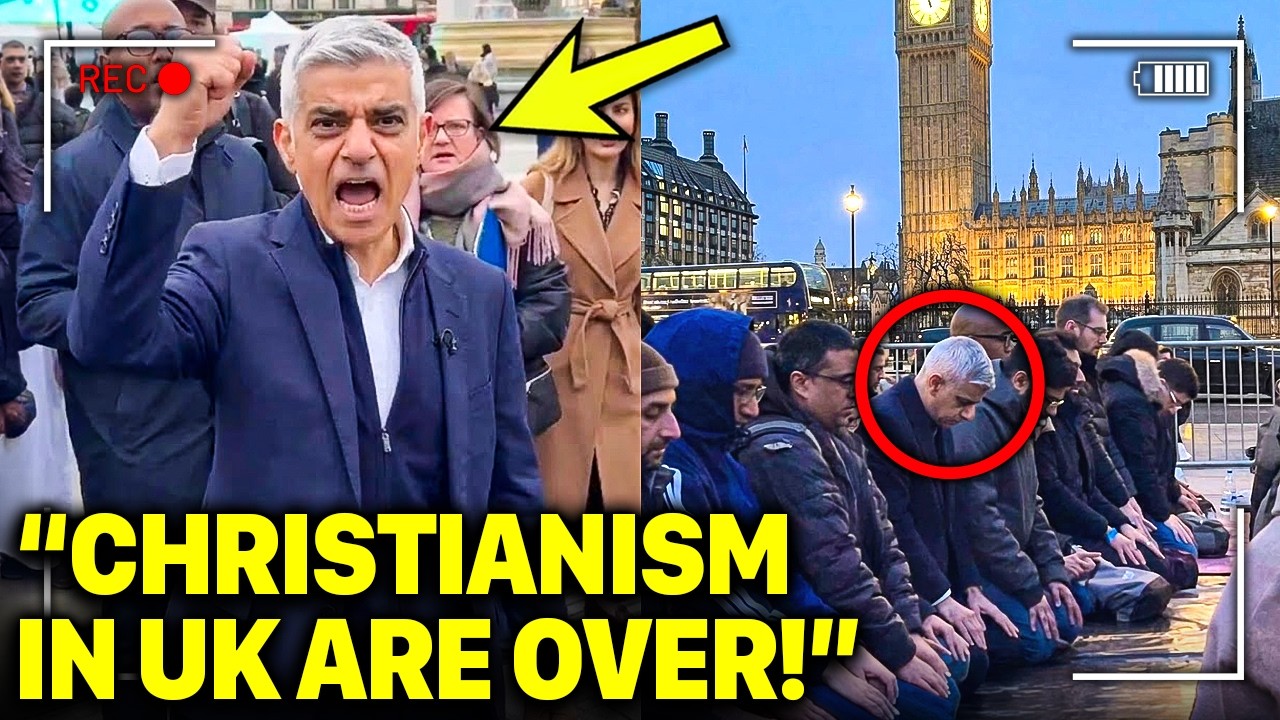
For critics, it looked like something very different: a heavily symbolic display in one of the country’s most iconic public spaces, backed by political leadership and then shielded from criticism by moral accusation.
That second perception is where the real political fallout begins.
Because many people are not only reacting to prayer or gathering itself, but to the feeling that if they object, question, or even express discomfort, they are immediately branded intolerant, phobic, or extreme.
That is a dangerous pattern in any democracy.
The moment people believe that visible political symbolism is protected from scrutiny while criticism of it is morally policed, resentment deepens far faster than official statements can calm it.
Much of the anger has focused on the Mayor of London.
Critics argue that he did not merely attend or acknowledge the event, but used it to project a very deliberate political image: a leader aligning himself with a powerful symbolic moment in the capital and treating the scale of it as a public triumph.
That is why so much attention has gone to remarks celebrating the size of the event.
Because when an elected leader boasts about something being the largest of its kind in the Western world, many listeners do not hear neutral enthusiasm.
They hear political signaling.
And political signaling in a landmark space always carries consequences.
Trafalgar Square is not a private hall, not a neighborhood side street, and not a closed religious venue.
It is one of the most loaded public stages in the country.
So when a highly visible faith event takes over such a place with clear official support, people are bound to ask whether they are seeing inclusion, endorsement, or the use of civic space for a message that goes beyond coexistence.
That is the question many in official politics seem unwilling to face directly.
Instead of arguing the issue honestly, they often retreat into the safer line that all criticism must be rooted in prejudice, as though there were no legitimate civic concern hiding beneath the anger.
But there is a legitimate concern.
A plural society depends on shared space feeling shared.
If large symbolic displays start making some people feel like spectators in their own capital rather than equal participants in public life, that feeling will not simply disappear because officials tell them it should.
This is where the debate becomes far more serious than one event.
Because it touches the broader fear, now increasingly visible across Britain, that some institutions are better at celebrating symbolic diversity than they are at defending equal standards for everyone who uses the same streets and squares.
Critics say the inconsistency is impossible to miss.
They point to situations where some public symbols are treated as sensitive, protected, or context-dependent, while others are treated as provocative the moment they appear in the wrong crowd, the wrong district, or the wrong political atmosphere.
That perceived double standard is politically explosive.
Whether every example is fair or not, the public increasingly believes that equal treatment under the law and in public order is no longer being applied with the same confidence across all groups and all symbols.
Once that belief takes hold, trust collapses quickly.
People stop seeing city leadership as neutral.
They stop seeing police judgment as impartial.
And they stop believing that official rhetoric about “London being for everyone” means quite what it claims to mean.
That slogan in particular now seems to irritate many citizens rather than reassure them.
Not because they oppose diversity in principle, but because they feel the phrase is being used as a shield against difficult questions about who gets to dominate space, shape atmosphere, and define the emotional tone of the city.
A city cannot belong to everyone if large numbers of people feel they must stay silent to remain respectable.
That is not inclusion.
That is managed perception.
And managed perception never holds for long once public confidence starts to crack.
The problem grows worse when political leaders appear to frame criticism as the real scandal rather than the deepening mistrust beneath it.
That only convinces more people that officialdom is treating public discomfort as a branding problem instead of a democratic warning sign.
What Britain needs now is not more moral grandstanding from either side.
It needs a more honest standard for public life: faith can be visible, public events can happen, civic leaders can engage, but none of that should place the event beyond criticism or turn public disagreement into reputational guilt.
That distinction matters enormously.
Because criticism of a public spectacle is not the same thing as hostility to every individual connected to it.
A democratic society must be able to hold that line, or it will soon find itself unable to discuss any deeply symbolic event without panic and accusation.
The wider political response has already shown how difficult that has become.
Labour figures have largely moved to condemn critics.
Other parties and commentators have taken the opposite view, arguing that the real issue is the growing willingness of official Britain to confuse disagreement with bigotry.
That split is now part of a much larger national fracture.
It is no longer simply about religion in public life.
It is about whether institutions can still mediate conflict fairly, whether shared space still feels shared, and whether elected leaders understand how symbolic acts are actually received outside their own political bubble.