Britain’s cost-of-living crisis has crashed into the fuel pump again, and this time Reform UK is trying to turn public anger into one of its sharpest political attacks yet on Keir Starmer, Rachel Reeves, and the entire economic direction of the Government.
What made this moment stand out was not just another interview or another complaint about rising prices.
It was the image.
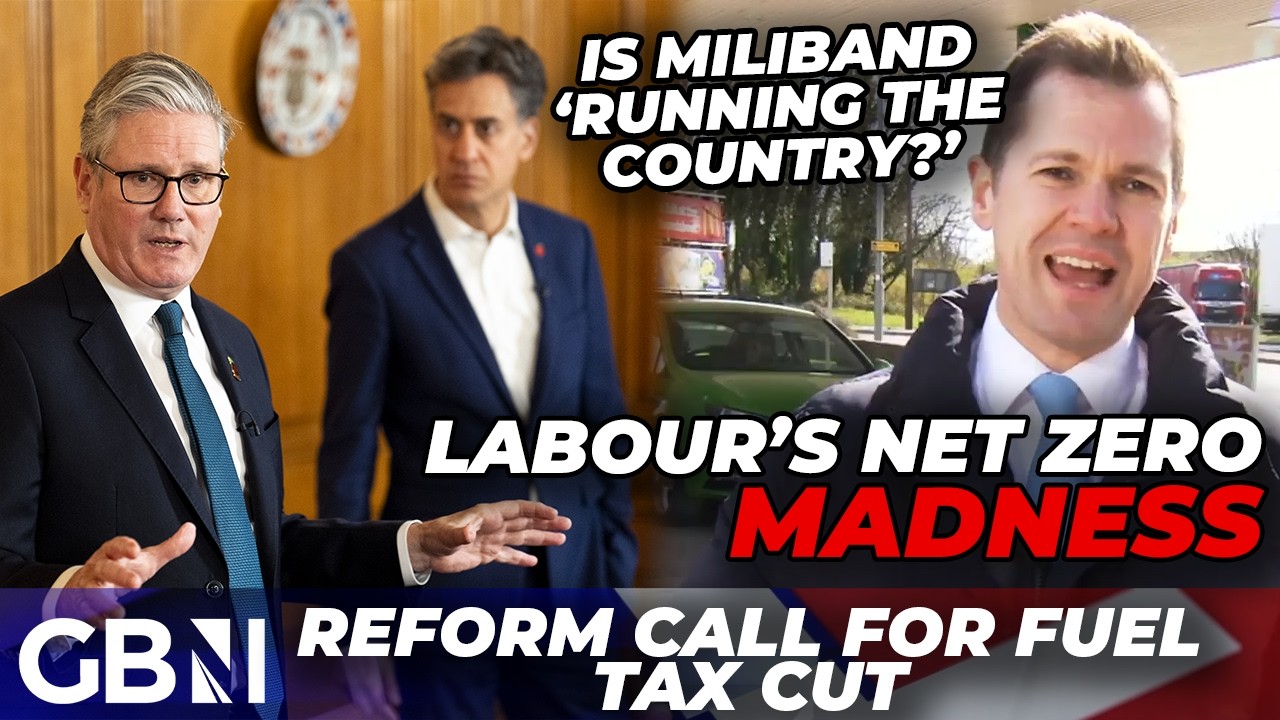
A petrol station in Dover.
Fuel sold at cost price.
Volunteers on site.
And a very deliberate message that ordinary motorists are being squeezed while Westminster stands by and watches.
Robert Jenrick used the setting well.
He did not present this as a technical economic argument for think tanks and spreadsheets.
He presented it as a direct act of pressure, a physical demonstration designed to show voters what cheaper fuel could look like if the Government actually wanted to provide relief.
That is why the event matters politically.
A tax argument feels abstract.
A cheaper pump price feels real.
And in modern politics, what feels real almost always lands harder than what sounds responsible.
Jenrick’s argument was blunt.
Rachel Reeves could cut the pressure on households immediately by dropping fuel duty increases and slashing VAT on petrol and diesel for a temporary period while the regional conflict drives costs higher.
That framing is potent because it turns a global shock into a domestic accusation.
The war may be external, but the pain at the pump becomes the Chancellor’s responsibility the moment voters are told she has room to act and is choosing not to.
And Reform knows exactly how to make that accusation bite.
It does not say simply that prices are high.
It says ministers are passive.
It says Reeves is behaving like a bystander rather than the person with her hands on the levers of tax and spending.
That line will resonate with many people because it connects with a much bigger frustration now embedded across British politics.
The sense that government often reacts to crises with commentary before action, and procedure before relief.
Jenrick reinforced that by talking not in national aggregates, but in familiar faces: mothers driving children to school, carers crossing counties, white-van workers, hauliers, and family businesses already worried about whether they can absorb another shock.

That was not accidental.
It was a carefully chosen contrast between working Britain and governing Britain.
One side burns fuel because life requires it.
The other discusses fuel as a Treasury variable.
This is where Reform is strongest.
It takes a practical household pain point and turns it into a moral accusation against the political class, arguing that government is not merely ineffective, but emotionally detached from the everyday mechanics of work, care, commuting, and survival.
Of course, the obvious challenge came back quickly.
Britain’s fiscal position is weak.
Debt is high.
Borrowing is expensive.
The room for tax cuts is tight.
Is this really affordable, or is it another opposition promise detached from arithmetic.
Jenrick’s answer was revealing because it moved instantly from tax relief to state waste.
He argued that the Government is already swimming in additional VAT receipts from higher energy and fuel costs, and that Reform would cover the rest by cutting what it sees as bloated, ideological, or misdirected spending.
This is classic Reform politics.
Do not just offer relief.
Offer relief alongside a list of enemies.
Benefits for foreign nationals, asylum hotels, foreign aid, and net zero subsidies are all presented as proof that the money exists, but is being spent on the wrong priorities.

That makes the argument far more politically combustible than a simple call for lower tax.
It becomes a full narrative of national misallocation, a story in which the British worker is paying more because the state is ideologically addicted to waste, climate theatre, and elite virtue spending.
Then came the energy question, and here Reform moved from immediate relief to deeper structural grievance.
Why, they ask, is Britain still not fully using its own oil, gas, and potentially fracking capacity while households and businesses pay ever more for energy insecurity.
That question is politically dangerous for Labour because it fuses three voter anxieties at once.
Bills, jobs, and sovereignty.
Once those are tied together, the Government can look less like a green modernizer and more like an administration deliberately making the country poorer and less resilient.
Jenrick hammered that point hard.
Lift the bans.
Issue licenses.
Drill.
Use North Sea resources.
Create jobs.
Bring in revenues.
Protect supply.
The language is simple because the target audience is not the policy seminar, but the voter who thinks common sense has been replaced by ideological self-harm.
The attack on Starmer sharpened again when the Prime Minister was accused of batting away responsibility by implying these questions belonged elsewhere in government.
Jenrick used that to paint him as weak, subordinate, and boxed in by Ed Miliband and the broader green pressure around him.
That is another smart Reform move.
If Labour’s energy policy is unpopular, split the leadership image.
Make Miliband look ideological and Starmer look powerless.
Once that impression sets, every rising bill becomes not just an economic cost, but a symbol of political weakness at the top.
But the interview did not stop at fuel.
It pivoted into something else now central to right-of-center politics: whether protecting children online can be done without quietly creating a back-door culture of censorship, surveillance, and speech restriction.
Here, Jenrick was careful.
He acknowledged the danger of social media addiction, online harm, and children’s exposure to adult material.
As a father, he said, these are not abstract issues.
They are lived, immediate, and deeply serious.
