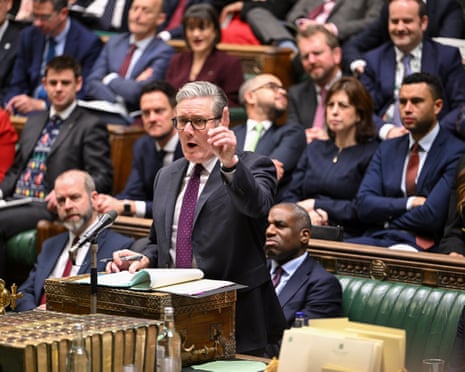
Westminster erupted into yet another political spectacle after Nigel Farage confronted Keir Starmer over the failure of the Government’s much-hyped “smash the gangs” strategy, only for the Prime Minister to swerve the question and trigger a furious Reform walkout.
What should have been a direct exchange about illegal Channel crossings, border enforcement, and national security instead turned into a blistering accusation that PMQs has become a chamber for evasion, deflection, and political gamesmanship rather than actual accountability.
Farage’s question was brutally simple.
If tens of thousands have crossed since the promise to “smash the gangs,” and if arrivals are still continuing at pace, then what exactly is the Government’s Plan B.
That question landed because it went straight to one of the most politically toxic issues in Britain today.
The boats have not stopped, public patience is thinning, and every failed promise on border control now feeds the wider belief that Westminster talks tough long before it acts effectively.
But instead of answering the substance of the question, Starmer hit back with a familiar counterattack, accusing Reform of not wanting solutions and mocking its conduct elsewhere, while avoiding a clear response on the crossings themselves.
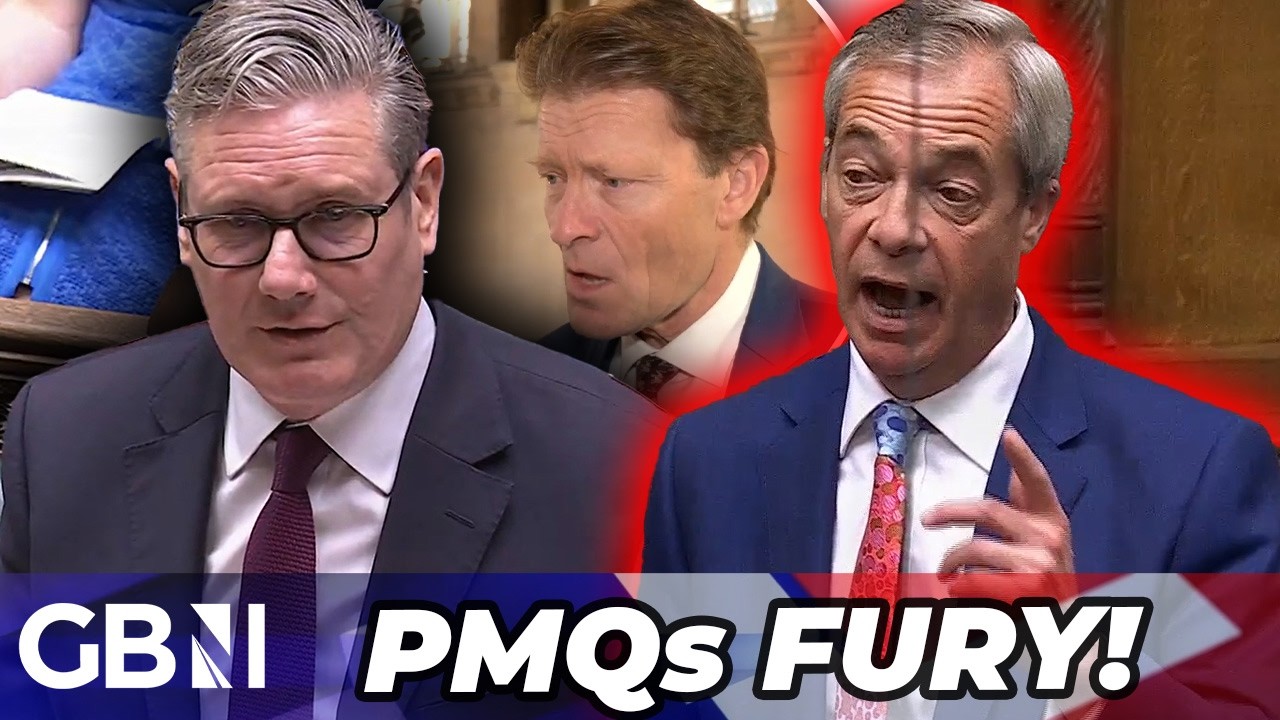
That was the moment the temperature changed.
Because for Reform, this was not merely an unsatisfactory answer.
It was proof, once again, that the Prime Minister would rather weaponize side arguments than engage directly with the issue voters actually care about.
Within minutes, eight Reform MPs walked out of the Commons chamber.
What viewers at home may not have fully seen on the main broadcast quickly became the real story afterward: a highly visible protest against what Reform called a complete farce of parliamentary accountability.
Deputy leader Richard Tice made the party’s position absolutely clear afterward.
He said the walkout was driven by fury over the Government’s refusal to answer a serious question about illegal migration and the obvious failure of the current strategy.
That language matters because Reform is trying to frame this not as a Westminster stunt, but as a symbolic act on behalf of millions of voters who feel the political class is still refusing to confront reality at the border.
And that framing is politically potent.
A walkout from PMQs can look theatrical, yes, but it can also look like the physical embodiment of a complaint many people already have: that Prime Minister’s Questions increasingly contains very few actual answers from the Prime Minister.
That is why this moment has travelled so fast.
It is not only about Farage, Starmer, or one exchange across the chamber.
It touches the larger collapse of confidence in whether Britain’s political institutions still know how to answer urgent questions with clarity rather than choreography.
For Reform, the boats issue remains ideal political territory.
It combines sovereignty, law enforcement, public anger, national security, and visible failure into one single symbol of what they say is a governing class that has lost control of the basics.
And when Starmer responds to that symbol by pivoting toward war comments, local councils, or party-point scoring, Reform gets exactly what it wants: another chance to argue that Labour is dodging the crisis because it cannot defend the results.
Tice leaned hard into that argument in the post-walkout interview.
He said the whole point of PMQs is contained in the name itself, that the Prime Minister is supposed to answer questions, not escape them through diversion and contemptuous political theater.
That line will resonate far beyond Reform supporters.
Because the complaint that PMQs has become more performance than scrutiny is now widespread, especially when the country is dealing with issues as emotionally charged and electorally powerful as illegal migration and border enforcement.
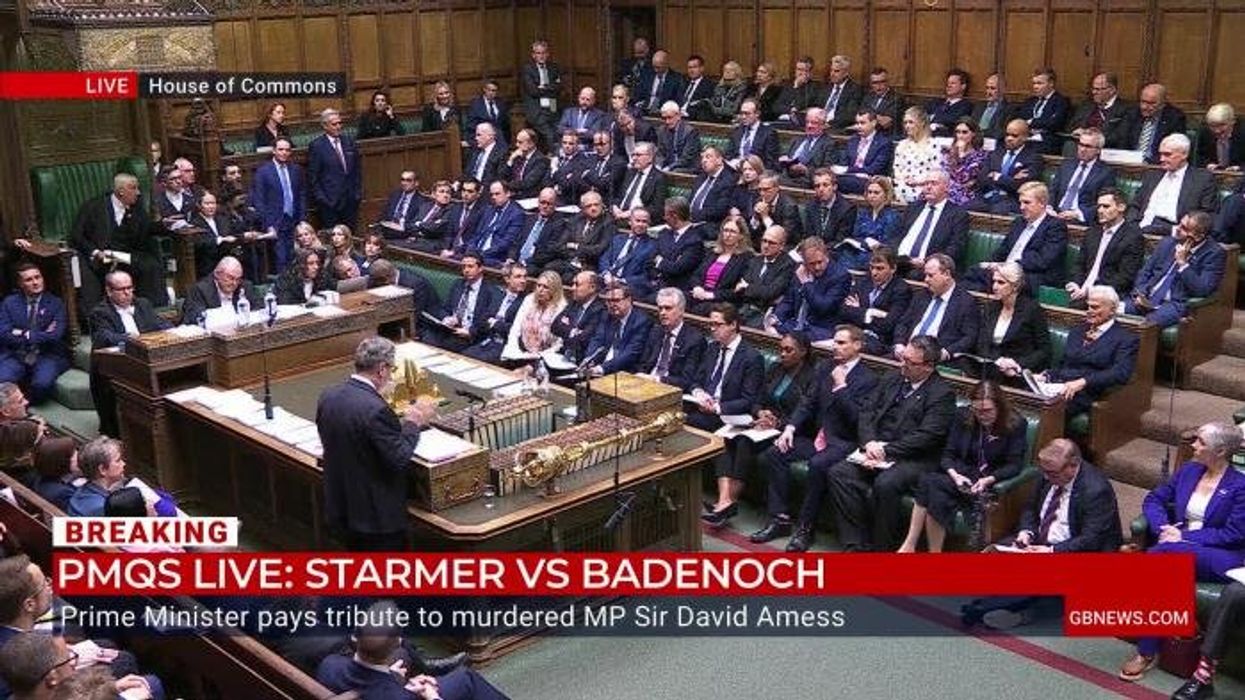
What makes this worse for Labour is timing.
Public concern over crossings is already intense, summer is approaching, and any suggestion that the Government still lacks a convincing operational answer will only feed the sense that “smash the gangs” was a slogan rather than a strategy.
That is precisely the line Reform wants to hammer home.
Plan A has failed, the gangs have not been smashed, crossings continue, and the Government cannot even explain in straightforward terms what comes next.
Labour, of course, will say Reform is exploiting public anxiety rather than solving anything.
Starmer’s reply suggested exactly that, accusing Reform of grievance politics and implying that the party prefers anger to actual delivery.
But that counterattack has limits when the visual facts remain politically ugly.
If people still see boats arriving and hear no clear Plan B, then every attempt to mock the question rather than answer it risks making Reform’s argument stronger, not weaker.
This is where the walkout becomes more than parliamentary drama.
It becomes a communications weapon.
Reform can now present itself as the only party willing to visibly reject the rituals of a chamber that asks urgent questions and then watches them disappear into partisan fog.
That does not mean the tactic is risk-free.
Some voters will see it as grandstanding.
Others will say serious parties stay in the room and keep pressing the case.
But Reform is clearly betting that public frustration is now so deep that disruption itself looks like honesty.
And in today’s political climate, that is not a foolish gamble.
The more Westminster looks polished and unresponsive, the more insurgent gestures acquire emotional power, especially when tied to subjects like migration where patience has already run dangerously low.