A new cultural fault line is opening across Britain, and it is no longer confined to churches, theologians, or a handful of traditionalists warning from the sidelines about a nation slowly forgetting what made it recognizable in the first place.
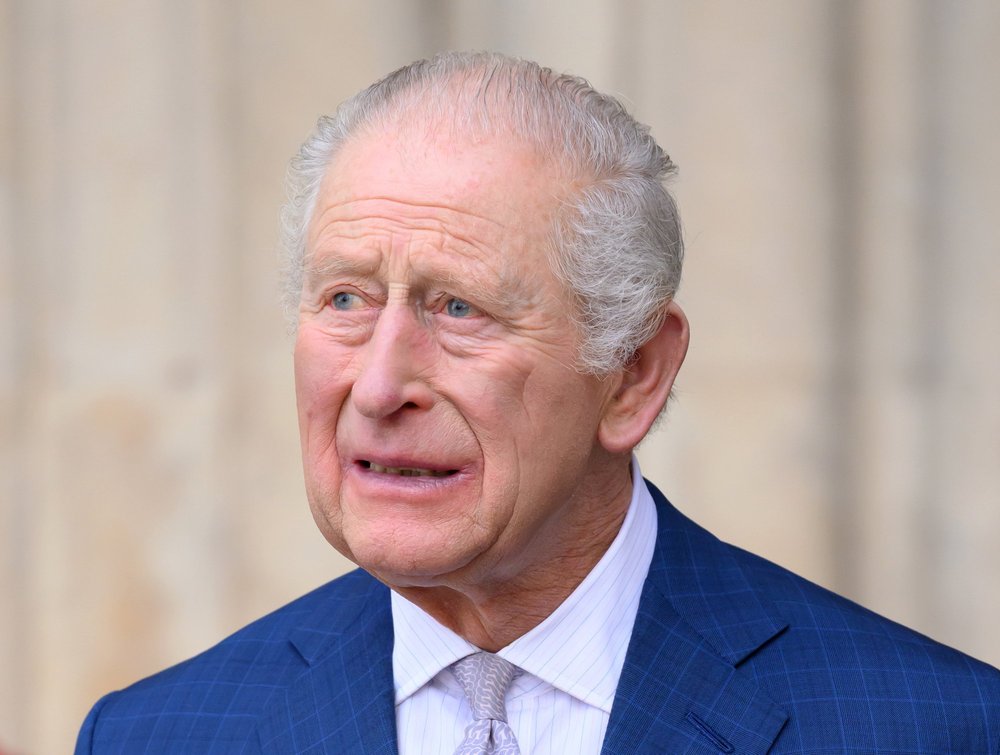
What has changed is that the argument is now moving into the national mainstream, because a bishop has directly challenged King Charles III to decide whether he will preside over quiet surrender or visibly defend the Christian inheritance bound to the Crown itself.
That challenge has landed with force because it does not sound like a minor ecclesiastical complaint about liturgy, doctrine, or church attendance, but like a constitutional warning that Britain’s spiritual foundations are being weakened while its institutions continue acting as though nothing fundamental is happening.
The bishop’s letter frames the issue in stark terms, describing Christianity not as one optional tradition among many, but as the historical moral architecture through which Britain’s laws, customs, public language, and national sense of duty were originally formed and sustained.
That is precisely why the letter has travelled so widely, because it gives voice to a feeling that many people have struggled to express clearly: the sense that Christianity is not merely fading naturally, but being pushed out of public life with increasing confidence.
According to this argument, the pressure is no longer subtle.
Christian belief is mocked more freely than before.
Christian morality is dismissed as outdated or intolerant.
Christian institutions are expected to bend, apologize, retreat, and redefine themselves just to remain acceptable within the public square.
For many critics of the current direction, that is not neutrality.
It is not modern balance.
It is not the fair treatment of all beliefs.
It is the steady stripping away of the one faith tradition historically woven most deeply into the constitutional and symbolic identity of the nation.
That is where the monarchy becomes central, because Britain’s Crown is not a detached ceremonial ornament floating above history, but an institution shaped by religious settlement, sacred duty, national continuity, and a constitutional relationship with the Church of England.
This is why so much attention is now being focused on the King’s silence.
Critics are no longer asking only whether he personally respects all faiths.
They are asking whether he still understands that his office carries a specific inherited responsibility that cannot be flattened into generic interfaith symbolism.
To many people, that distinction is crucial.
A monarch may show courtesy to all communities, yet still be expected to defend the particular constitutional inheritance attached to his own throne.
Once that obligation becomes blurred, the symbolism of the Crown itself begins to weaken.
That is exactly what the bishop’s plea was designed to expose.
It argues that Britain has reached a moment where silence itself has consequences, because when the Crown refuses to speak clearly, the vacuum is filled by institutions, ideologies, and social pressures that are far less hesitant.
The warning is severe but politically intelligent.
It does not merely say Christianity is under cultural pressure.
It says the nation is now at a crossroads, and that the monarch himself must decide whether history will remember him as a steward of inheritance or a spectator to its erosion.
That framing is powerful because it turns what might have been dismissed as religious nostalgia into a question of leadership, stewardship, and national continuity.
It says that the crisis is not only theological, but civilizational, because once roots are severed, institutions lose meaning faster than elites expect.
This is why the letter has resonated so strongly online.
Large numbers of people, including many who are not conventionally religious, still recognize that Britain’s Christian inheritance shaped the ethical vocabulary of the country even when private belief became weaker or less visible.
Those people may not attend church every week.
They may not speak in doctrinal terms.
But they still feel instinctively that a nation loses something serious when it becomes embarrassed by the moral and spiritual sources that helped form its sense of restraint, duty, sacrifice, and order.
That embarrassment, they argue, now runs through too much of public life.
Christianity is often tolerated as heritage or architecture, but far less comfortably accepted as a living authority capable of speaking into questions of law, morality, culture, education, and the national future.
The concern, then, is not simply decline through indifference.
It is erosion through asymmetry.
Other belief systems may be handled with caution, sensitivity, or institutional anxiety, while Christianity is treated as the one tradition expected to absorb mockery, retreat quietly, and apologize for its own existence.
That perception is politically explosive.
Because once millions begin to feel that the historic faith of the nation is being gradually pushed to the margins, they do not hear the language of pluralism as reassurance.
They hear it as a polite vocabulary for managed displacement.
This is why the King’s position has become so uncomfortable.
If he leans too strongly into universal language and multi-faith posture, critics say he risks hollowing out the meaning of his own title.
If he speaks more explicitly, he risks angering the cultural establishment that prizes ambiguity.
But the bishop’s letter insists that this is precisely the point.
Historic responsibility is not supposed to be easy.
Leadership that carries no cost is barely leadership at all.
And a monarch who never risks displeasing the age may end up pleasing history far less.
Prince William’s recent signals about faith and continuity have only intensified this argument.
To some observers, they suggest that the next generation of monarchy may better understand the depth of public unease and the need to reconnect the Crown with the Christian foundation many feel is slipping away.
Whether that reading is fair or overstated, it points to something important.
The monarchy is no longer being judged only on style, popularity, or ceremony.
It is increasingly being judged on whether it still has the courage to embody something distinctively British rather than merely broadly inoffensive.