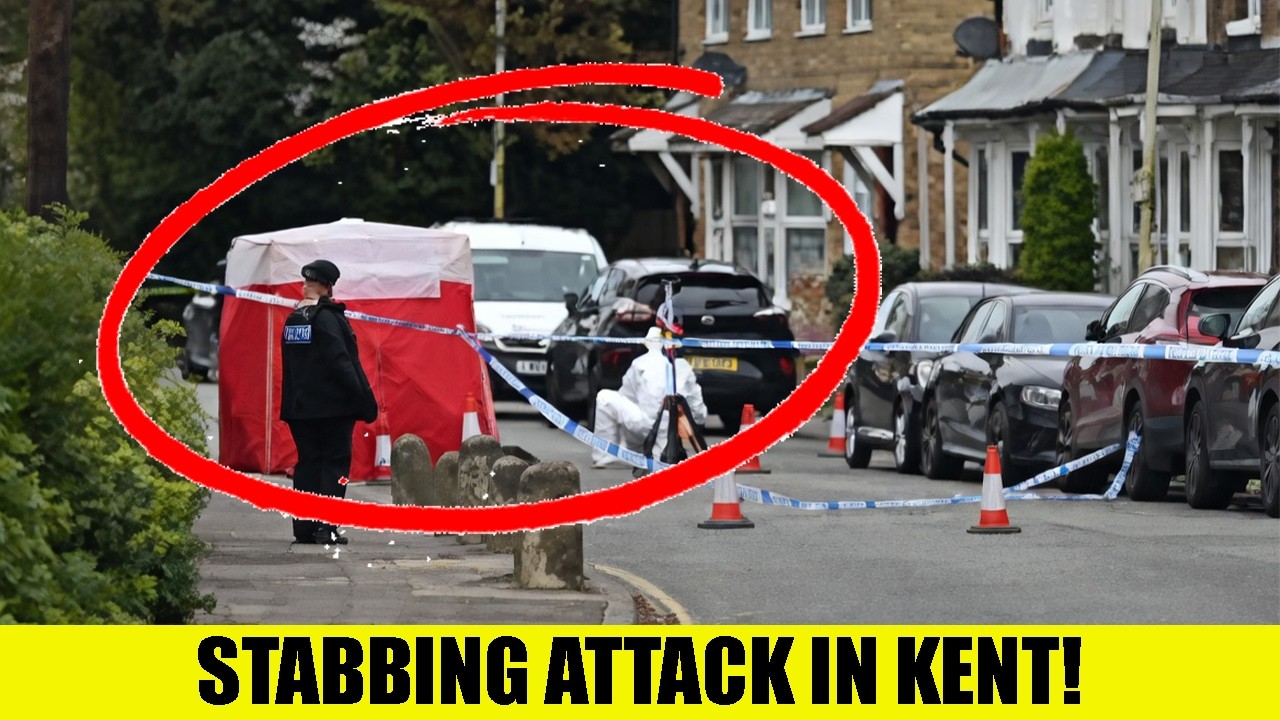
There is something deeply disturbing about a society where the death of another teenager in a stabbing no longer feels like a national rupture, but like another grim update in an endless stream of violence.
That is the real horror behind incidents like this, because the tragedy is not only that another 19-year-old life has been lost, but that the public is increasingly conditioned to receive these killings as routine.
A murder in the early hours of the morning should still stop a country in its tracks.
It should provoke grief, outrage, and a serious public reckoning about what kind of environment is producing so many young deaths with such terrifying regularity.
Instead, too often, the reaction now follows a familiar script.
Police arrive.
A cordon goes up.
A road is shut.
A short appeal for witnesses is issued.
A politician says the incident is shocking.
And then the nation moves on while another family’s world has been permanently destroyed.
That pattern is exactly what makes this crisis so much bigger than one town, one victim, or one investigation, because repetition has created something dangerous, which is emotional normalization.
When a country hears about yet another fatal stabbing and immediately assumes there will be another one tomorrow, the crisis is no longer only criminal.
It is cultural.
It is psychological.
And it is moral.
It reveals a society slowly adapting itself to a level of violence that should still be unacceptable in every possible sense.
What makes these stories so haunting is how ordinary they now sound at first glance.
A young man.
A residential road.
Emergency services.
A forensic tent.
A death confirmed at the scene.
No full answers yet.

The details are brief, but the emotional damage is vast, because behind every short news report sits a family entering the worst day of their lives.
A mother may have answered a phone call that shattered her future.
Friends may still be staring at messages that will never receive a reply.
A community may be trying to understand how an ordinary road became the site of irreversible loss before dawn.
This is why the language of “shocking and upsetting” no longer feels sufficient on its own.
Of course it is shocking.
Of course it is upsetting.
But those words now risk becoming official placeholders that express grief without forcing a harder conversation about why these killings keep happening with such sickening frequency.
Because the public is no longer only mourning the dead.
It is also grappling with a growing belief that the violence is becoming part of the background noise of national life.
That belief may be one of the most dangerous developments of all.
A society can survive fear more easily than it can survive numbness.
Fear still reacts.
Fear still demands protection.
Fear still believes something is wrong.
But numbness quietly accepts repetition, and once repetition is accepted, urgency begins to die.
This is why every new stabbing lands with two tragedies at once.
The first is the human life lost.
The second is the growing public suspicion that there will be another case, another tribute, another plea for witnesses, and another short cycle of outrage before silence returns.
That cycle is corrosive.
It teaches communities that safety is fragile, that youth is vulnerable, and that death can arrive suddenly in places once assumed to be ordinary and familiar.
It also teaches young people something equally bleak, which is that violence now occupies too much space in the imagination of everyday life.
When teenagers and young adults grow up in a culture where fatal stabbings dominate headlines week after week, the social atmosphere itself changes.
Parents become more anxious.
Friends become more watchful.
Nighttime travel feels more threatening.
Routine freedoms start shrinking under the pressure of private fear.
And once that begins, violence reaches far beyond the direct victim.
It reshapes behavior.
It alters trust.

It changes how communities move, gather, and think about risk.
One killing can radiate consequences through an entire town.
Repeated killings can do the same to a nation.
That is why the phrase “incidents like this are incredibly rare in our community” carries such emotional weight whenever it is said.
It is not just a comment about one event.
It is an attempt to defend a community’s sense of itself against the fear that even familiar places are no longer as secure as people once believed.
And that fear matters, because when public confidence in ordinary safety begins to weaken, social trust erodes with it.
People start looking differently at the streets they know.
At the walk home.
At the town center after dark.
At the idea of being in the wrong place at the wrong time.
The emotional geography of a place changes after violence, even when the physical map stays the same.
This is why short crime reports often hide a deeper national story.
What appears on the surface as a single investigation can also reflect a broader crisis of insecurity, fatigue, and loss of faith in the promise that everyday life should not carry such brutal risks.
The public does not only ask who did it.
It also asks why this keeps happening.
Why so many victims are young.
Why so many stories now feel interchangeable.
And why national reaction never seems equal to the scale of the grief being accumulated.
That accumulation is easy to underestimate.
A country does not just absorb statistics.
It absorbs atmosphere.
It absorbs repeated headlines.
It absorbs the emotional message that another killing has taken place and life must continue as normal.
Over time, that message hardens into something bleak, which is the quiet suspicion that violence has become one of the permanent features of modern life.
That suspicion should terrify anyone who still believes public safety is the first duty of a functioning society.
Because once people start expecting fatal violence as part of the weekly rhythm of national news, the damage is no longer confined to crime rates or police files.
It reaches into the moral imagination of the country itself.
It lowers expectations.
It weakens outrage.
It normalizes grief.
And it leaves families to suffer losses that disappear from public attention far faster than they disappear from private memory.
A 19-year-old man is not a headline category.
He is not a pattern.
He is not a segment of content between updates.
He was a life with years ahead of him, relationships around him, and a future now permanently cut off by violence.
That is what must remain at the center of any honest response.
Not only the investigation.
Not only the statement.
Not only the next update.
But the unbearable fact that a young life ended, and another family has joined a growing number of people forced to live with irreversible absence.
If Britain wants to be honest with itself, it must confront not only the stabbings, but the public numbness surrounding them.
Because a nation is in serious trouble when another teenage death no longer feels like a rupture in the national conscience, but like another tragic item in a feed that refreshes too quickly for grief to keep up.
And perhaps that is the most chilling reality of all, because the true measure of a crisis is not only how many victims it creates, but how normal their loss begins to feel to everyone still watching.