A society enters a deeply dangerous phase when the safety of women becomes not only a public emergency, but also a political weapon used to inflame rage, harden division, and turn fear into a permanent national mood.
That is the point Britain appears to be approaching, where violent crime, distrust in institutions, online censorship claims, and outrage-driven media are colliding into one of the most emotionally explosive debates in modern public life.
Nothing spreads faster than a story that combines vulnerable victims, state failure, public anger, and the suspicion of a cover-up, because such a story does more than inform, it wounds, provokes, and demands immediate emotional allegiance.
Once citizens begin to believe that authorities speak more carefully about public sensitivity than public safety, every official statement starts sounding less like reassurance and more like evasion dressed up as responsibility.

That perception is politically devastating because people can forgive weakness more easily than they can forgive dishonesty, and they can tolerate complexity more easily than they can tolerate the feeling that their fear is being managed rather than answered.
This is why crimes against women now sit at the center of a much larger national crisis, because the public is no longer debating individual cases alone, but whether the system still has the courage to confront painful realities openly.
When those realities involve questions of policing, integration, class tension, public order, and institutional hesitation, the conversation becomes combustible almost instantly, especially in a country already exhausted by mistrust and cultural polarization.
Many people feel they are being asked to stay calm while the ground beneath them shifts, and that emotional contradiction is exactly what outrage entrepreneurs exploit with ruthless efficiency across social media every single day.
They understand something mainstream institutions still underestimate, which is that fear without a credible response does not simply fade away, but mutates into suspicion, tribal loyalty, and hunger for voices that sound less cautious and more absolute.
That is why the most viral commentary now thrives on the language of betrayal, because betrayal feels more powerful than incompetence and far more shareable than nuance in an online environment built to reward emotional certainty.
The tragedy is that women’s safety, which should unite a serious society around protection and justice, is increasingly being absorbed into a performative information war where pain becomes branding and terror becomes a tool of political mobilization.
Instead of careful truth, the public gets emotional theater.
Instead of accountability, it gets escalation.
Instead of serious reform, it gets competing narratives fighting to own the anger of a frightened and exhausted population.
This distortion matters because once fear is converted into ideology, every crime becomes symbolic, every victim becomes political evidence, and every failure of law enforcement is used to support a much larger story about national collapse.
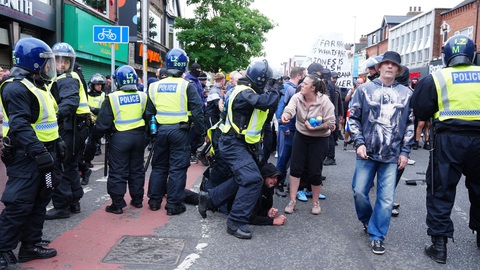
That larger story may feel emotionally satisfying, but it often does very little to protect the people supposedly at the center of it, because outrage is easier to monetize than prevention, and fury travels faster than reform.
Women living with real fear deserve more than slogans, more than viral clips, and more than commentators using their vulnerability to wage tribal warfare against political enemies or entire communities.
They deserve functioning emergency response.
They deserve competent investigations.
They deserve prosecution that is swift, transparent, and consistent.
They deserve institutions strong enough to act without fear and honest enough to speak without euphemism.
What makes the current moment so volatile is the widening gap between official language and lived experience, because when the state sounds calm while citizens feel cornered, that gap is interpreted not as professionalism, but as indifference.
And once indifference is suspected, trust collapses quickly.
Parents change routines.
Women avoid trains, dark streets, and empty stops.
Families build private survival habits because they no longer fully believe public systems will be there when danger appears.
That is one of the most serious warning signs any democracy can face, because when ordinary people begin quietly restructuring their lives around diminished trust, social breakdown has already moved from the headlines into daily behavior.
At that point, the debate is no longer only about crime statistics.
It becomes a referendum on legitimacy.
Are institutions protecting people fairly.
Are authorities telling the truth.
And does the political class still understand the emotional reality of those it governs.
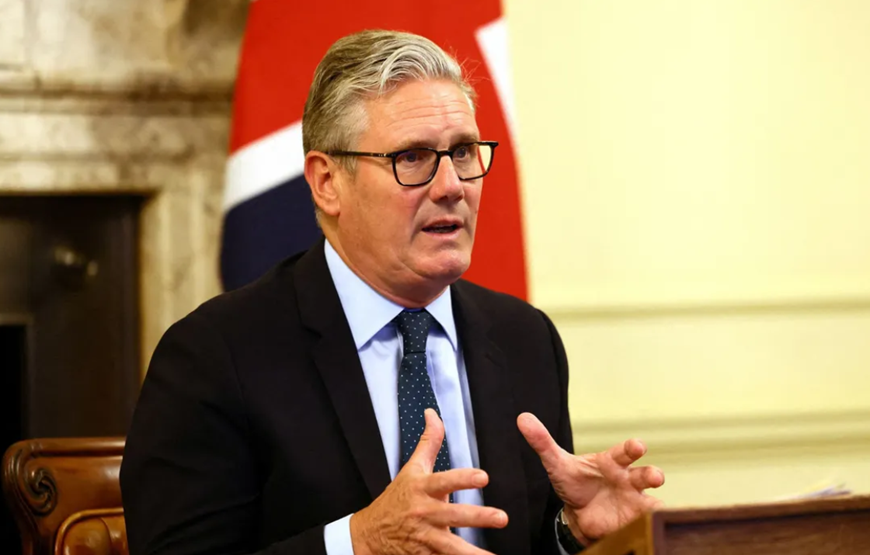
The most reckless actors online answer those questions with total certainty, because certainty is profitable.
They offer simple enemies, simple causes, and simple punishments.
They promise clarity in a confused age, while often deepening panic and pushing societies closer to mutual suspicion and collective rage.
That is why Britain’s crisis is not only about violence or policy failure, but also about the architecture of public emotion itself, because fear now circulates through algorithms that reward outrage more than evidence and confrontation more than repair.