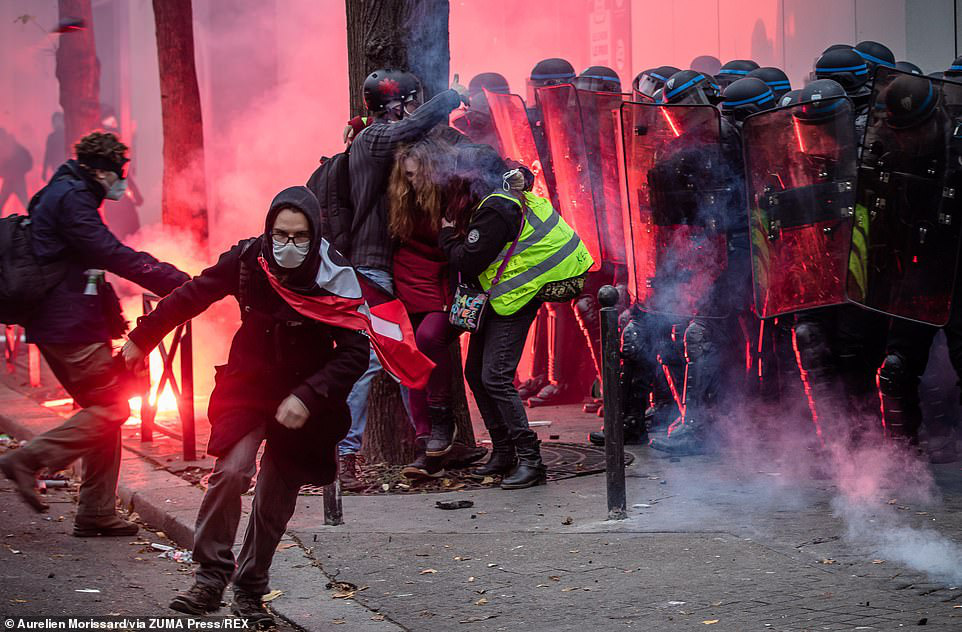
Britain is entering a point of cultural tension where even public rituals are no longer received as merely devotional acts, because many citizens now read them through a much wider argument about power, symbolism, and who defines the tone of shared space.
That is why scenes from major public gatherings in London provoke such strong reactions, because people are not only watching a religious event unfold, but asking what it means when faith, politics, identity, and civic authority appear so visibly intertwined.
For some, such events are a celebration of community, belonging, and recognition in a plural society, yet for others they feel less like inclusion and more like the unmistakable projection of organized cultural confidence into spaces meant to belong equally to all.
That difference in perception is precisely where the debate becomes explosive, because shared public space is never neutral once large symbolic acts take place within it under overt political sponsorship, especially in a capital already burdened by mistrust and fragmentation.
What angers many people most is not only the event itself, but the speed with which criticism of it is often treated as morally suspicious, as though questioning the use of civic space automatically places someone outside the bounds of acceptable democratic speech.
That is a serious problem, because in any free society people must be able to criticize the political use of religion, the religious use of politics, and the staging of collective symbolism in public life without immediately being smeared as hateful or extremist.
The moment that criticism becomes taboo, democratic debate begins to shrink, and once democratic debate shrinks around subjects that are visibly reshaping public life, resentment does not disappear; it hardens and returns in more aggressive, more polarizing forms.
This is why public frustration keeps intensifying around symbolic events in London, because many citizens now suspect that the political class is happy to celebrate highly visible expressions of identity while sounding strangely nervous about defending the neutrality of shared civic space.
That neutrality matters enormously, because a plural city can survive deep differences only if its major public spaces still feel like common ground rather than stages on which one group after another demonstrates confidence, numbers, or political leverage.
Once that feeling of common ground weakens, every public gathering becomes more charged, because people start asking whether they are witnessing coexistence or competition, coexistence or pressure, coexistence or a gradual rewriting of what counts as normal in the capital.
Those are not trivial questions, and they should not be dismissed with lazy accusations, because citizens who feel disoriented by cultural change are not automatically enemies of pluralism; often they are simply demanding a serious explanation of where shared boundaries now lie.
A democratic country should be able to answer them honestly by saying that all lawful communities may celebrate important moments, yet no community should expect criticism to be silenced when those celebrations spill into heavily symbolic spaces with unmistakable political undertones.
That distinction is vital, because people are not only reacting to prayer, ceremony, or visibility itself, but to the sense that certain public spectacles are protected by a moral asymmetry in which questioning the display becomes riskier than staging it.
This is where accusations of dominance, provocation, or political messaging enter the conversation, and while those words can be overused, they cannot simply be forbidden, because they reflect how some citizens experience events that others insist are purely harmless or inclusive.
In a genuinely free society, both perceptions must be allowed to exist and be argued over openly, because democratic pluralism does not mean everyone must interpret the same public act in the same morally approved way.
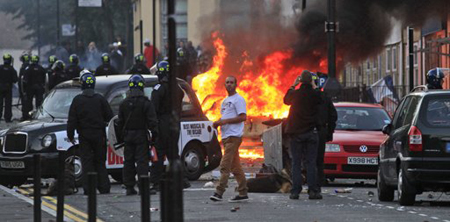
The trouble begins when establishment figures treat criticism itself as the deeper scandal, because that signals not confidence in pluralism, but fear of disagreement, and a fearful establishment always ends up narrowing debate rather than strengthening civic trust.
That narrowing becomes especially dangerous when public criticism is met with smear tactics, reckless comparisons, or the suggestion that merely objecting to a highly visible event places someone in the company of genuinely inflammatory or divisive actors.
Such comparisons are irresponsible, because they poison serious discussion by replacing argument with guilt by association, and once that becomes standard practice, legitimate criticism is driven out of respectable spaces and pushed toward harsher platforms instead.
This is not good for anyone, because a country that cannot host robust criticism in mainstream democratic life eventually empowers the loudest and most combustible voices outside it, voices far less interested in civic balance than in organized outrage.
The better path is much harder but much healthier: permit criticism, distinguish it carefully from bigotry, reject smears, and insist that no religion, ideology, or political bloc acquires a de facto privileged position in national public life.
That principle should be non-negotiable in a plural democracy, because equality means people are protected equally under law, not that certain belief systems become specially insulated from strong public challenge whenever they intersect with power, symbolism, or political office.
And power is part of this story whether some people like it or not, because when elected leaders visibly align themselves with particular religiously charged spectacles, they are not acting only as private believers, but as public figures shaping the symbolic hierarchy of the city.
Citizens are therefore entitled to ask whether such acts unify or divide, whether they reassure or alienate, and whether the people orchestrating them are motivated by civic inclusion or by the more tactical desire to convert religious visibility into political capital.