There is something deeply unsettling about hearing a city described as safe while, on the very same day, another life is taken in a knife attack that leaves the public feeling shaken, angry, and emotionally exhausted.
That is why incidents like this strike such a powerful nerve, because they do not remain isolated tragedies in the public mind, but quickly become symbols of a much larger crisis in trust, security, and credibility.
When an elderly woman dies after a stabbing in broad daylight and police are forced to reassure the community that there is no wider danger, the facts of the case matter, but so does the atmosphere surrounding it.
And that atmosphere is becoming harder for any official statement to control, because repeated incidents of violence have changed the way people hear reassurance, interpret safety, and judge whether leadership truly understands public fear.
A city can survive crime.
A city can survive criticism.
A city can survive even periods of visible strain.
But what it struggles to survive is the widening gap between what residents are told and what they feel when they watch another knife-related death enter the news cycle.
That gap is where public confidence begins to fracture, because reassurance only works when people still believe it reflects the emotional truth of daily life rather than a carefully managed message designed to calm headlines and defend reputation.
This is why cases like this reverberate far beyond the scene itself.
They are not only criminal investigations.
They are emotional tests of institutional credibility.
Each one forces the public to ask whether safety is being described honestly or rhetorically.
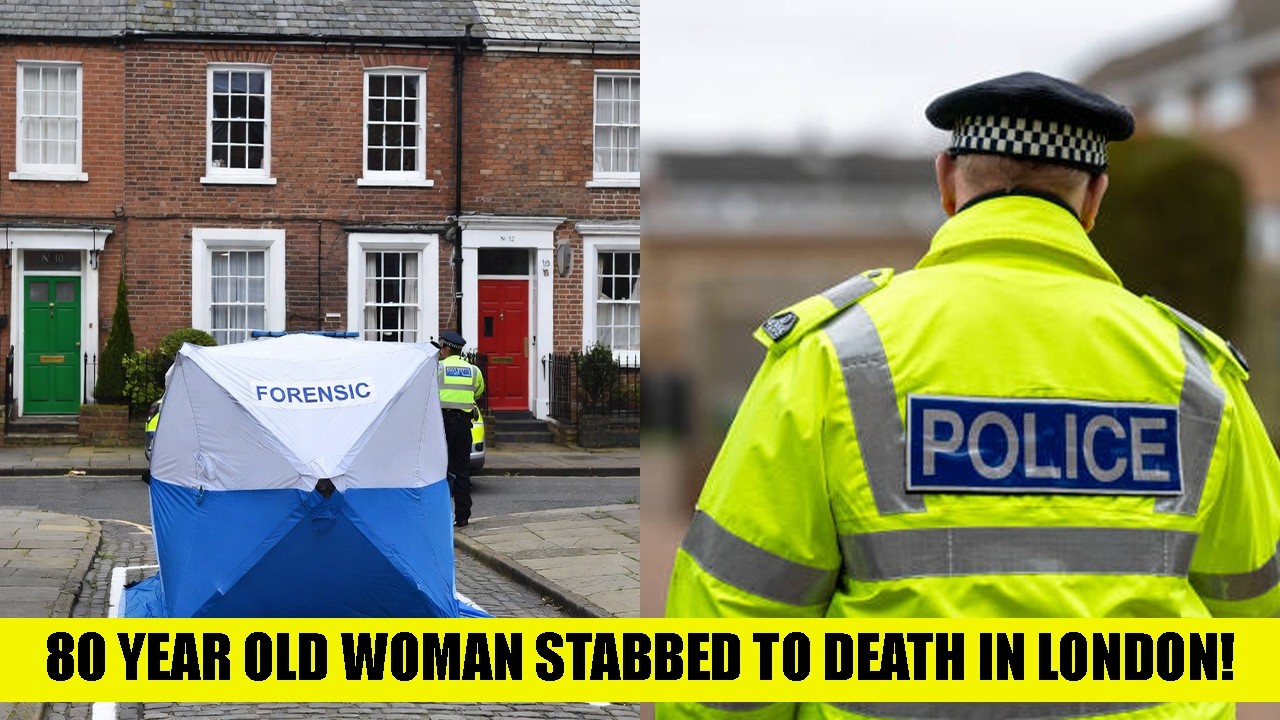
The details of such incidents are always stark in their simplicity.
A call comes in.
Officers arrive.
Emergency crews respond.
A victim is found with serious injuries.
A hospital becomes the place where hope collapses into confirmation of death.
That sequence is devastating on its own, yet what makes it heavier still is the now-familiar national context surrounding knife crime, where each new case feels like another addition to a grim pattern the public no longer believes is exceptional.
This is how trust slowly erodes in a modern city.
Not always through one catastrophic failure, but through repetition, fatigue, and the creeping sense that every new act of violence collides with a political language that no longer persuades people it fully grasps the scale of the problem.
An 80-year-old woman should be able to move through her community without becoming the victim of fatal violence.
That should not be controversial.
That should not require ideological framing.
That should be one of the most basic expectations of civilized public life.
And when such a basic expectation is shattered, the emotional impact extends far beyond the direct victim and her family, because the public begins to absorb a darker message about vulnerability itself.
If an elderly woman is not beyond the reach of lethal street violence, then the symbolic damage is enormous.
People do not just mourn.
They imagine.
They picture their mother, grandmother, neighbor, or themselves inside the same sudden nightmare.
That is why public fear after these stories is not irrational theater.
It is the natural human response to repeated reminders that ordinary life can be interrupted by brutality with almost no warning and in places that once felt familiar and safe.
When police describe such incidents as isolated, they may be speaking in a precise investigative sense, but the public often hears something different, because isolation in legal language does not erase accumulation in emotional reality.
One case may be isolated.
Then another arrives.
Then another.
And over time, people stop processing events as separate files and start experiencing them as one continuous atmosphere of decline and uncertainty.

That psychological shift matters enormously.
Citizens begin altering routines.
Families become more protective.
Older residents feel less secure.
Simple movements through local areas begin carrying new calculations of risk that were once barely considered at all.
This is the hidden cost of recurring violence.
It does not only destroy lives directly.
It reshapes behavior, corrodes peace of mind, and weakens the invisible social confidence that allows a city to function as more than a cluster of streets under administrative control.
In moments like this, the most damaging mistake leaders can make is to assume the issue is purely one of messaging.
People do not need to be lectured out of anxiety when another fatal stabbing has already entered the public conversation.
They need evidence that the fear they feel is not being dismissed as exaggeration.
That distinction is crucial, because once residents begin to suspect that civic leaders are more invested in defending the city’s image than confronting the emotional truth of repeated violence, every future reassurance becomes politically weaker before it is even spoken.
This does not mean every act of violence proves a city is lawless, collapsing, or beyond recovery.
Serious societies must resist panic as much as they resist denial.
But resisting panic does not require pretending the cumulative impact of these incidents is small, manageable, or purely perceptual.
The public does not live inside statistics alone.
It lives inside atmosphere.
Inside repeated headlines.
Inside stories shared by neighbors.
Inside the quiet dread that builds when violent incidents keep appearing in places that are supposed to feel ordinary.
That is why another knife killing involving an elderly victim feels so emotionally explosive.
It cuts through the usual political noise and confronts people with something raw and undeniable, which is the fragility of safety when violence becomes familiar enough to keep returning but shocking enough to never feel acceptable.
